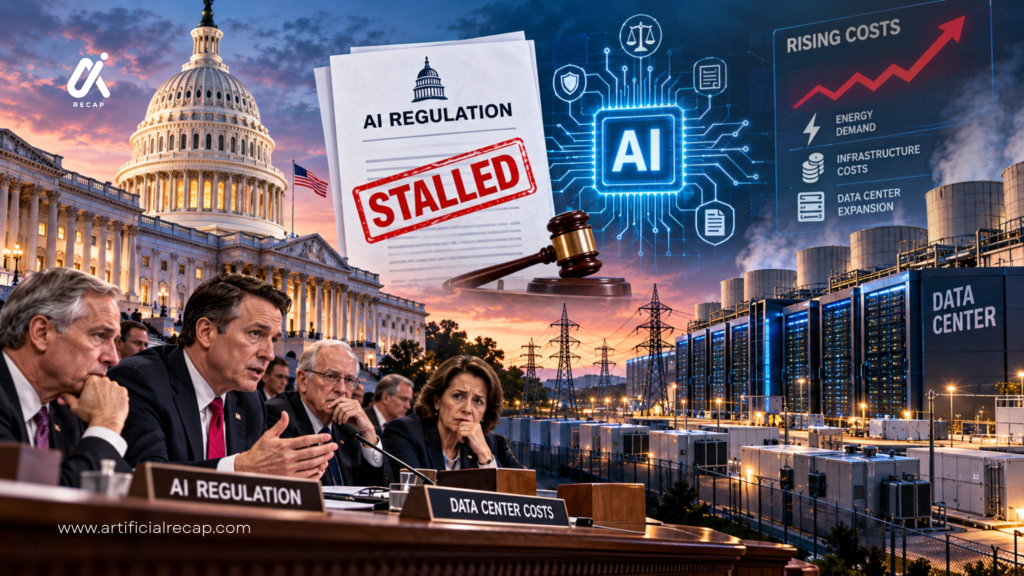
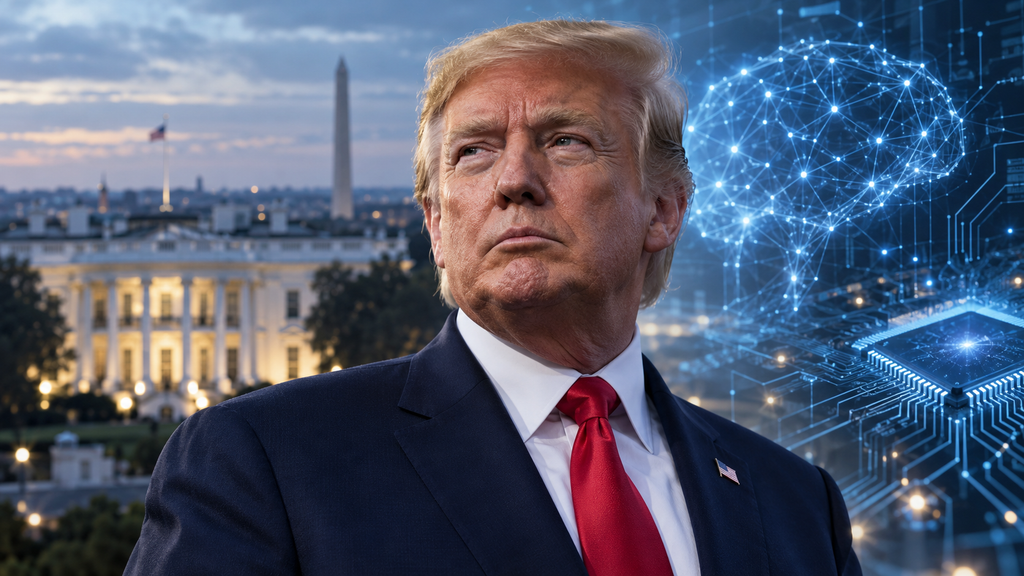
The Trump administration is reportedly conducting a new search for a senior U.S. intelligence official to lead a new AI task force, positioning national security expertise in the middle of how the administration will deal with AI. It is significant that AI policy is being considered beyond the technology and economic sphere. As the technology advances, it becomes a key Washington concern related to intelligence, cybersecurity, military competition, and the U.S. technology stand-off with China. However, the impact of the task force will hinge on a factor that is not immediately obvious from the headline: the power it is given, and the issues on which Trump hopes it will focus first.
AI Policy Is Moving Closer to National Security
The appointment of a top intelligence official is a strong statement on how the administration sees the future of the AI race. Advanced AI systems could provide intelligence agencies with massive amounts of information, such as pattern recognition, translation, and speeding up intelligence processing. There are also new risks associated with the same technology. AI can be employed to create convincing fake content, to automate cyber operations, and to speed up influence campaigns. Governments are also growing increasingly concerned about the protection of advanced chips, models, research, and other strategically important technology. It’s not just a chance; it’s also a security threat.
A task force of the intelligence community may then shift its focus away from consumer-focused issues like which chatbot is superior and focus more on safeguarding and leveraging increasingly potent AI systems.
Trump’s AI Push Has a Bigger Competitive Backdrop
The ruling also comes amid the United States’ race to keep its hold on high-tech artificial intelligence. American companies still play a key role in fueling the global AI boom, but governments are increasingly taking the lead in leading the way in AI infrastructure, semiconductors, computing power, and frontier models. One of the most significant factors in this equation is China. One thing is no longer up for debate for Washington: U.S. companies are able to create superior AI.
The other critical question for policymakers is how far advanced technology can cross the border, whether sensitive technology can be moved to competitors, and the speed at which government agencies are able to adopt AI themselves. A task force can be created to facilitate the resolution of those matters in various parts of the federal government that would otherwise deal with them individually.

What an Intelligence-Led AI Taskforce Could Actually Change
The effects for the average end user may be short-term. Fortunately, a new government task force doesn’t automatically alter the functionality of ChatGPT, Gemini, Claude, or other AI products. Its work may have its effects more clearly manifested if it brings about changes in:
- government procurement of and use of AI systems;
- Security needs of critical AI systems; and
- Restrictions on high-tech and computer applications; and
- intelligence agencies’ use of AI;
- Proposed policies to address AI-related foreign threats.
The AI Change in Washington is evident.
The bigger takeaway from the event is the increasing linkage between AI and national security. The focus of AI policy, in the past, was much on innovation, safety, and new consumer products. While those issues are still relevant, the conversation around AI is now happening alongside the conversation on cyber, military power, intelligence and geopolitical competition, among other topics, with governments discussing this at length.
The appointment of an intelligence leader to lead the AI task force is Trump’s latest sign of that change. Now to be seen is who’s leading the group, what kind of power the administration will grant it, and whether its actions start to impact American technology and its competition overseas with the likes of AI firms.