

Meta’s fast-growing AI agent Muse is creating an unexpected winner on Wall Street: AMD. As consumers increasingly use AI agents to handle tasks instead of simply answering questions, investors are betting that the shift could dramatically increase demand for the server CPUs that power these systems.
That optimism helped AMD shares climb on Tuesday, October 6, after the company said it plans to substantially increase chip supply in 2027 to keep up with surging AI demand. AMD has already gained roughly 195% this year and recently crossed the $1 trillion market-value mark.a
Muse Is Showing Investors What AI Agents Could Become
Meta launched Muse in September as a more autonomous type of AI assistant. The agent can not only answer questions, but also perform multiple tasks like emailing, making travel bookings, and executing some transactions on behalf of a user. That’s a significant disparity for chip makers. A classic chatbot can accept a query and then await your next inquiry. An AI agent can be kept active to perform a number of steps, which may use more computing, memory, and networking resources.
The initial success of Muse has made some investors think that it’s no longer just a trial technology. Reuters reported that Muse has achieved 2.8 million downloads in its first 12 days, while Citi now projects the assistant could generate over $27 billion in revenue for Meta by 2030.
The CPU Opportunity Behind AI Agent Boom
AI agents may be a big new driver for computing needs, says Citi analyst Atif Malik. He has increased the price of AMD up to $800 from $575 and believes that the CPU industry will expand at a steady rate of about 60% per year through the end of the decade and to a $300 billion market.
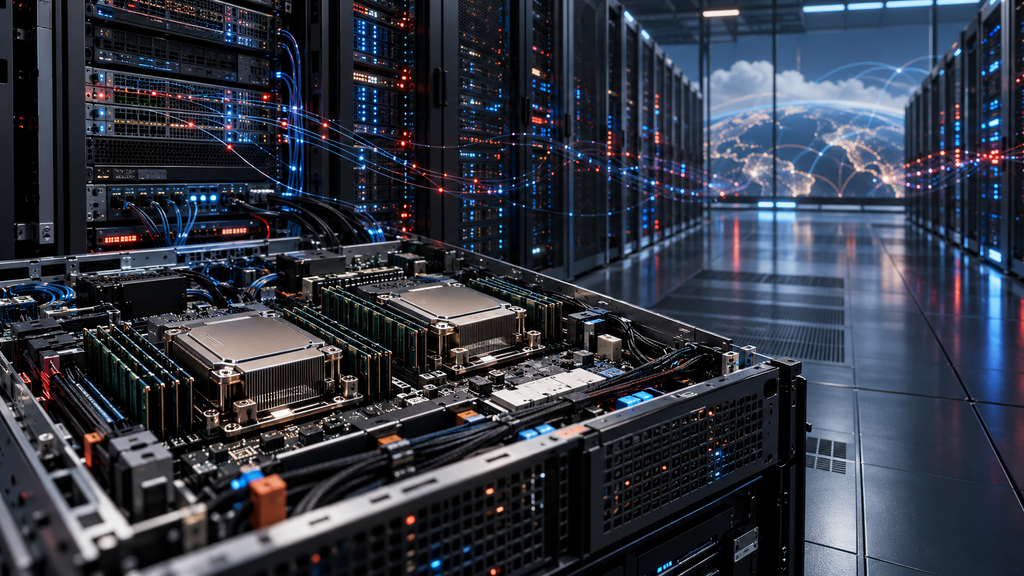
The basic idea is that the more users can employ AI agents, the more the companies need to keep to operate the agents. CPUs are not always the most critical part of the puzzle for AI applications, but they are crucial in their support of many other aspects of an application. They are used to manage workload, coordinate systems, and ensure the efficient operation of AI systems.
AMD already has a foothold in that market. Meta has been using millions of AMD EPYC server CPUs and has now broadened its partnership with AMD in its AI infrastructure. In February, AMD announced that the company would be leading the charge in terms of customers for its next-generation EPYC processors.
AMD Is Preparing for More Than Just Muse
AMD believes the rise of agentic AI could expand demand across its entire computing portfolio. At its Advancing AI 2026 event, the company described its latest EPYC processors as designed for workloads involving AI agents, while also highlighting its GPUs and rack-scale AI systems. Meta is validating AMD’s next-generation EPYC platforms and testing AMD Helios systems as part of its broader infrastructure plans.
That gives AMD a way to benefit even if several different AI agents become popular. Muse is simply giving investors an early example of what that future might look like.
The Big Question Is Whether the Demand Lasts
While the market for consumer AI agents is still nascent, Muse has offered some early signs of adoption. There are also doubts regarding interactions between agents and third-party services, which are also of interest to Meta. For example, Amazon stated it hasn’t approved Muse to use its store, and requested Meta remove the retailer from the experience.
The computing power needed might increase significantly if AI assistants become systems that continually execute tasks for millions or billions of people, rather than chatbots. AMD is not waiting for that to happen, however: Its chief executive officer, Lisa Su, projects a substantial rise in the supply of chips in 2027.
What’s crucial now is that the AI hardware race could be about to take a new turn. Perhaps the next generation of AI demand won’t be just increased model size, but rather billions of agents performing their work in the background.