
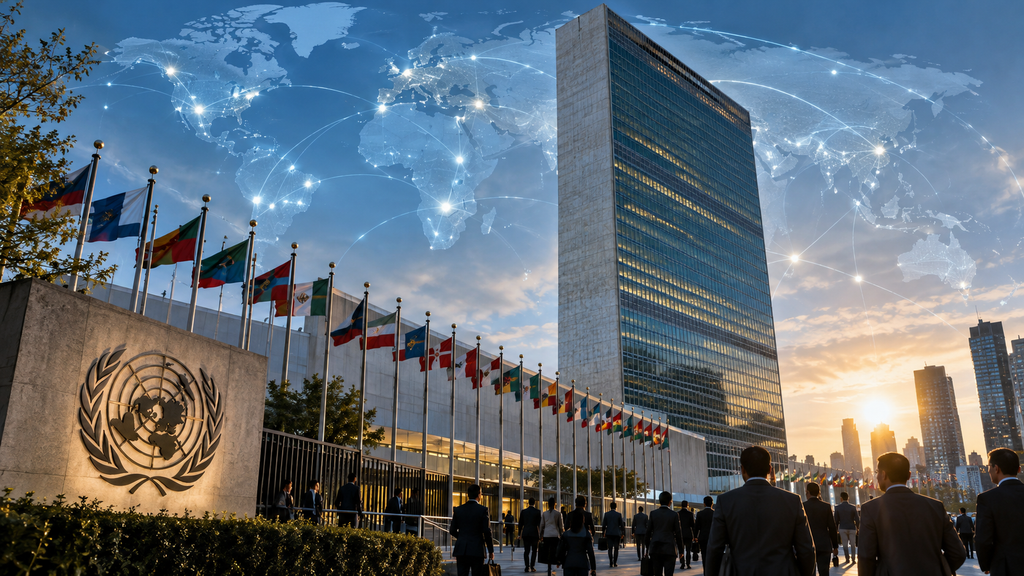
AI is advancing faster than governments can control it, and the UN is aiming to unite countries before the ‘chasm becomes greater’. So the question should not be, does AI need governance, but how countries can establish a set of rules together without creating an unsafe, non-inclusive, or non-human-rights-respecting technology.
AI Is Moving Faster Than the Rulebook
Driven by the United Nations General Assembly to bring governments, technology companies, civil society, academia, and technical experts together into the same discussion, the United Nations is stepping up its efforts in the field of international AI governance through its Global Dialogue on AI Governance.
The first session will be held in Geneva on 6–7 July 2026, and will involve all 193 UN member states and other stakeholders. The initiative was created by a General Assembly Resolution, and all the members agreed to the terms of this policy.
The objective is not just to develop another set of tech conversations, the UN says. The dialogue, on the contrary, is designed to facilitate countries in finding common solutions to AI governance and tackle issues that may transcend their national boundaries.
The UN Brings the World to One Table
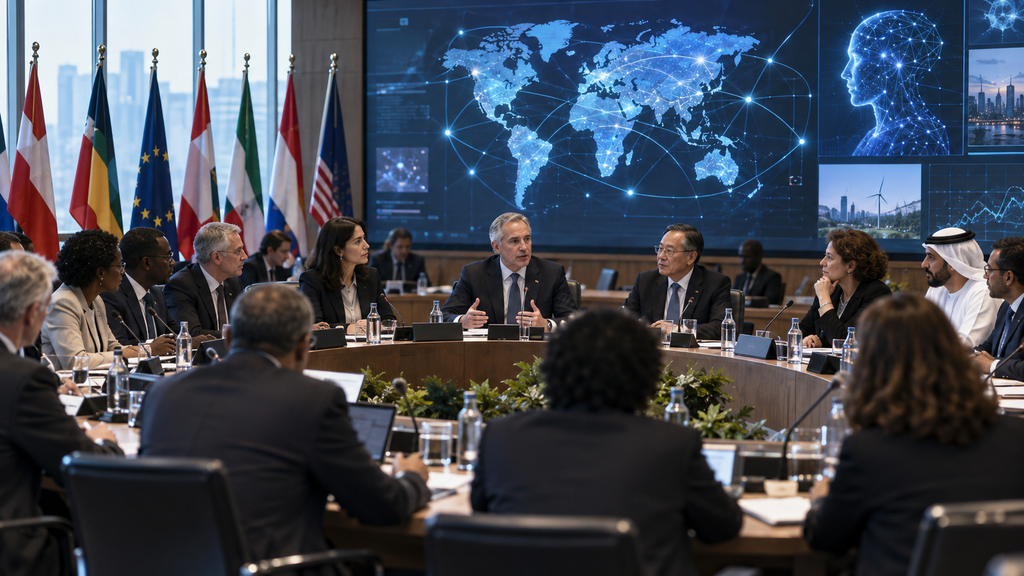
Artificial Intelligence (AI) systems are being adopted in various fields of software development in business, education, healthcare, and more. They can also impact countries outside of the country in which an AI Company or developer is located.
This further underscores the need for greater international coordination. The Global Digital Compact issued by the UN emphasizes an inclusive, risk-based governance approach, and inclusiveness in terms of countries and participation by different stakeholders. It also emphasizes international cooperation, human rights, and safe, secure, and trustworthy AI.
Access is also a part of the discussion for developing countries. The UN believes that the rules for AI governance shouldn’t be determined just by countries with the biggest tech sectors, and those with smaller AI resources should not be left to follow the rules made elsewhere.
The Rules That Could Shape AI’s Future
The UN’s AI governance discussions cover several major areas:
- Safe, secure and trustworthy AI
- Human rights and human oversight
- Transparency and accountability
- AI capacity-building and access
- The social and economic effects of AI
- Compatibility between different national AI regulations
- Open-source AI, open data and AI models
The UN is also sponsoring an Independent International Scientific Panel on AI (IISPAI) that will reinforce the scientific evidence governments will have at their disposal when discussing AI governance.
The Global AI Debate Is Just Getting Started
Global Dialogue is not a meeting, but a process. The next annual session will be held May 3-4, 2027 in New York.
The challenge will be to translate international discussion into something that countries can do that doesn’t create a patchwork of rules that will make cross-border AI development more difficult.
Who is going to Set AI’s Rules?
Issues of AI regulation are becoming an international matter. The UN is creating a forum for these differences to be elaborated on, and keeping common issues of safety, human rights, access, and accountability in mind; governments have varying priorities and regulatory frameworks.
The results may shape the future of AI companies in how they design and roll out products in other countries, for those who use AI on a daily basis. Perhaps, more importantly, can governments and technology players come up with enough common ground to establish rules that are in step with the swift pace at which AI evolves?