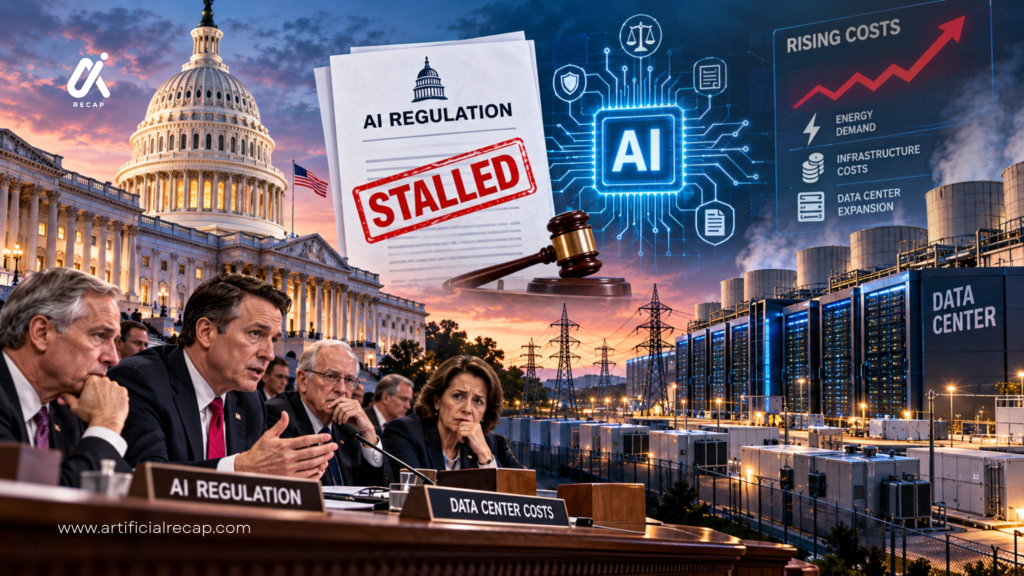
AI is drawing in a lot more funding than any other technology boom in history. But a tricky question is only growing in prominence: Can AI deliver enough economic benefits quickly enough to warrant the investment in companies’ billions of dollars in chips, data centers, and computing power?
The race is huge, according to a new analysis by sources. PwC is projecting that total investment in data centers will reach more than $30 trillion globally by 2050, and even Anthropic is anticipating spending at least $518 billion in the next decade on AI infrastructure.
But the AI boom isn’t necessarily coming to an end anytime soon. Rather, it demonstrates the groundswell of demand for the technology to prove itself in the real world.
The AI Buildout Has Become a Race Against the Clock
The companies developing advanced AI are not simply spending money on software. They are building an enormous physical infrastructure of data centers, servers, networking equipment, and specialized chips.
Anthropic’s plans provide a striking example. According to its IPO prospectus, about 80% of its planned infrastructure commitments are non-cancelable or require payment regardless of usage. The company has agreements involving Google, Amazon, and Microsoft worth hundreds of billions of dollars.
OpenAI’s proposed $500 billion Stargate infrastructure project shows that Anthropic is not alone. Across the industry, AI companies and cloud providers are making huge commitments based on expectations that demand for advanced AI will continue growing.
All That AI Spending Needs a Payoff
AI businesses claim the technology is poised to significantly boost productivity, automate tasks, and speed up scientific breakthroughs.
In August, JPMorgan wrote that broad-based productivity gains in the U.S. from AI are still elusive. Bain & Company also has estimated that current AI infrastructure investment to support existing markets might not be enough to cover the revenue they can generate. The analysis indicates that the buildout will require additional revenue for companies of over $4.2 trillion over five years.

This is an unusual situation. The technology could turn out to be very useful in the future, but investors and companies are investing a lot of money now before the full financial return is realized.
The past is a cautionary tale: Sometimes, big technologies like railroads and the Internet made economies grow, but that growth didn’t always come at the same time as the growth of the technology itself.
The Money Is Already Changing How Big Tech Operates
Earlier this year, sources reported that Microsoft, Alphabet, Amazon, Meta, and Oracle, collectively, would have more capital expenditures than free cash flow by 2027, if current trends continue. For these companies, the investments in infrastructure are significant and are fueled by the growing demand for AI services, which is pushing up the need for data centers and cloud resources.
But it’s not only when AI fails that investors feel disappointed. All technology requires more time to return a profit than companies and markets are expecting.
The more intriguing one is, instead, whether AI will transform the world. It has to do with whether the change comes in time to compensate for the vast infrastructure being put in place to make it viable.
If it does, then today’s expenditure might represent the beginnings of a new technological age! The technology infrastructure of the AI race, however, might be useful – and some of the companies investing in it may have a difficult financial trip.