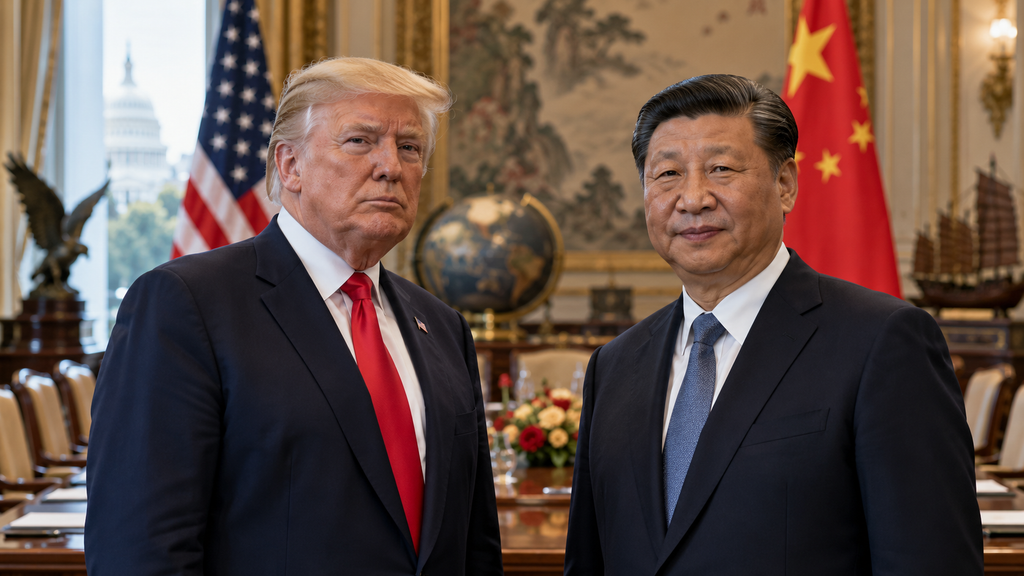
President Xi Jinping’s three-day state visit to Washington has led to new trade and artificial intelligence accords between China and the United States. The two sides agreed to seek more favourable treatment for non-sensitive trade worth $30 billion in both directions and agreed to set up a new forum for discussion of advanced AI risks and benefits.
The announcements form part of a consensus agreed during Xi’s meetings with U.S. President Donald Trump that was announced by China’s state news agency Xinhua on Monday. The deals follow a new round of competition between Washington and Beijing in the fields of trade, technology, artificial intelligence, or even crucial minerals.
The $30 Billion Trade Arrangement is more specific than it sounds
Economists say the number is $30 billion, but that’s not to say the two nations have eliminated $30 billion in tariffs.
The White House says that a group of U.S.-China experts has agreed on recommendations for more advantageous tariff treatment for $30 billion of each country’s non-sensitive goods. Examples of what’s produced include agricultural products, seafood, logs and wood products, cosmetics and medical devices, among U.S. exports, and small appliances, toys, holiday decor and children’s car seats, among U.S. imports from China.
That distinction matters because the arrangement still involves implementation and product-specific treatment rather than an immediate blanket reduction across all trade.
The agreement also follows earlier consultations between the two countries. China’s Ministry of Commerce said before Xi’s visit that trade teams from both sides were maintaining close communication over the proposed tariff arrangement.
AI Just Became Part of the Same Conversation
The trade agreement was not the only technology-related development.
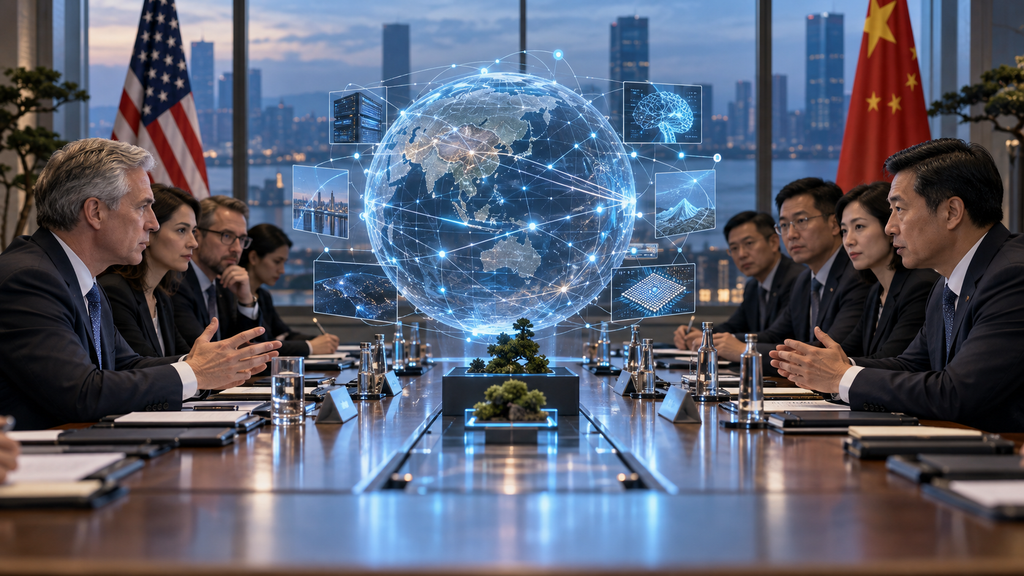
The United States and China agreed to establish what Washington calls the U.S.-China Super Intelligence Dialogue, a channel intended to exchange views about the risks and benefits of emerging AI technologies. The White House said the next exchange is scheduled for November 2026 and that the countries will also establish a bilateral communication channel for incidents involving these technologies.
The wording is notable. The White House fact sheet says the two countries agreed to use the term “super intelligence” rather than “artificial intelligence” for the applicable emerging technologies.
For ordinary AI users, this is less about a new chatbot or model launch and more about how the world’s two major AI powers communicate when advanced systems create safety, security or other cross-border concerns.
From AI Competition to an AI Communication Channel
The new discussion takes place amid growing U.S.-China rivalry in the field of AI.
The countries are putting significant resources into building AI infrastructure, developing advanced computing and domestic technology capacities, and, much like other aspects of the trade, technology exports and supply chains are currently mired in conflicts.
“China’s expanding AI capabilities add context to the discussion, including Alibaba’s push into AI chips and computing infrastructure.”
That makes a dedicated communication channel significant even though it does not resolve those underlying disputes.
Instead, it creates a mechanism for the two governments to discuss risks and potential benefits directly. The separate incident channel could also provide a way to communicate if an AI-related event requires urgent contact between the two sides.
The Next Test Is Turning Agreements Into Action
Now it’s time to implement the agreements in a more measured way.
The White House says the two countries will continue discussing rare-earth supplies and other important minerals, and the newly created Board of Investment will be another forum for discussing investment opportunities and barriers. China also says it will buy at least 10 million metric tons of U.S. coal for 2027 and 2028.
For AI, the next milestone is clearer: the two sides are expected to hold their next super-intelligence exchange by November.
The bigger story is therefore not simply the $30 billion trade figure or the creation of another diplomatic meeting. Washington and Beijing are putting formal channels around two areas—trade and advanced technology—that have become increasingly difficult to separate. Whether those channels produce lasting cooperation will depend on what happens after the announcements.