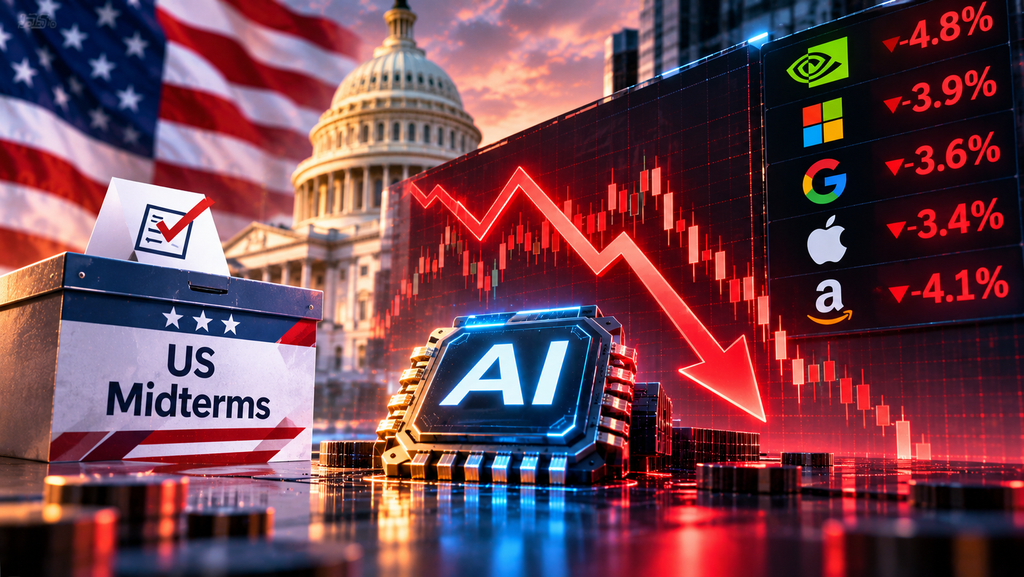
Surprising investors, the US midterm elections have pushed AI stocks down sharply as investors reassess the future of the AI boom in America. The broad Democratic win has resulted in fresh political uncertainty that could stall data center projects, add burdens on them, and make it more difficult for tech firms to build out their AI footprint.
Thursday (Nov. 5) was a particularly bad day for the Nasdaq as it fell 5.56%, the biggest one-day decline in 19 months. Some of the worst affected companies were those in the AI chip, cloud computing, data centre and infrastructure sectors.
For investors, it’s not just about who’s in charge of Congress; whether the political shift will alter the conditions that have enabled billions of dollars to go into AI development.
Democrats’ Victory Has Put the AI Infrastructure Boom Under Pressure
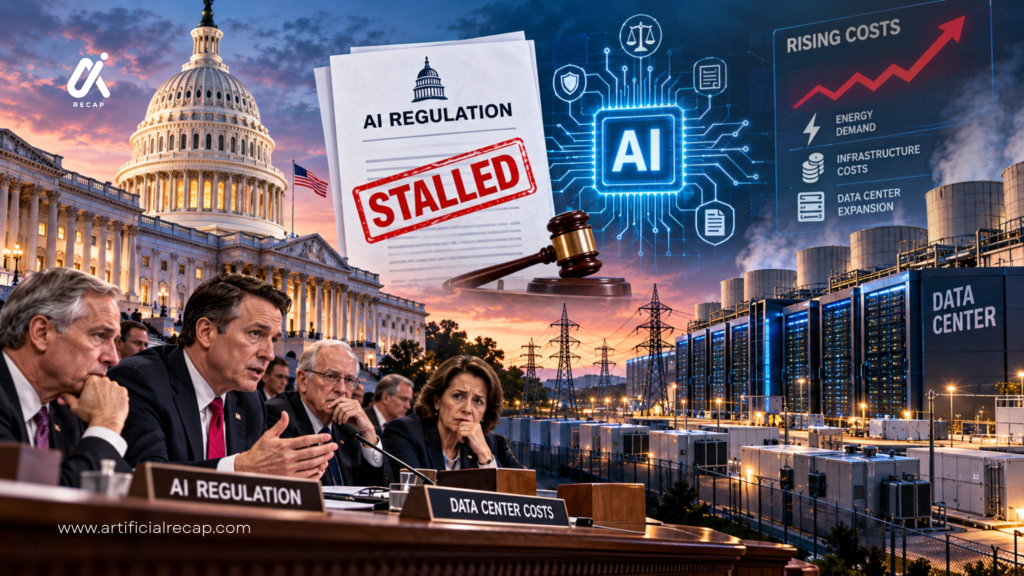
With the Democrats doing so well in the 2026 midterm elections, there is hope for increased opposition to the Trump administration’s technology policies. The party may be able to block the expansion of the AI infrastructure with its control of Congress and its wins in key state races. Some Democratic candidates also opposed data center expansion due to issues with electricity and water usage, noise, and strain on local infrastructure.
Texas governor-elect Gina Hinojosa, for instance, pledged to bring a moratorium on the building of new data centers. The pledges have fueled investor fears that key AI infrastructure initiatives could be met with stricter and more prolonged regulatory requirements and approvals.
Why a Political Shift Could Affect Companies Building AI
This correlation between elections and AI stock prices stems from the industry’s strong focus on infrastructure investments. Many of the advanced AI systems are billions of dollars in development and depend on a combination of powerful chips, large data centres, networking, and reliable electricity. Drops in data center construction activity could impact chipmakers with reduced demand for chips in data centers, cloud providers with delays in expansion, and data center operators with further regulations and costs.
Large computing facilities will also impact energy companies and equipment makers’ expectations of demand. That is why the market reaction went beyond the AI developers as the market began to evaluate the broader infrastructure landscape that is powering the AI boom.
The AI Boom Was Already Facing Questions About Its Cost
Investors were already asking themselves if the huge investments in AI would be able to pay off the valuations of the companies. Financial pressure is another issue for data center operators, especially those smaller neocloud providers who are heavily dependent on external funding, and it has become more expensive.
The latest political uncertainty has added to these concerns. UBS analysts have estimated that about 30% of the new capacity in the US data centre market could be lost if construction on projects stalls in the country in 2028, according to Reuters. However, if projects are postponed, AI companies might not be able to increase their computing power fast enough to keep up with demand, which could impact the industry’s growth trajectory.
Is This the Beginning of a Bigger AI Market Correction?
The big question is if the sell-off is a blip in the market or a reflection of decreased investor confidence. There have been no immediate limitations on AI businesses or on the building of data centers. Future legislation, regulation, and state-level action would be required for any significant changes to occur. Investors are also considering high AI valuations, the cost of infrastructure investments, and whether companies can make substantial AI investments profitable.
Finally, Friday, Nov. 6, markets began to rebound, with the Nasdaq rising by about 2% at the opening of trading in New York, according to the Council on Foreign Relations. The question for AI companies is whether they can make their investments in infrastructure pay off over the long term in the current climate of increased political volatility. The midterms have not dampened the AI fervor, but they have brought an additional danger to its anticipated growth.