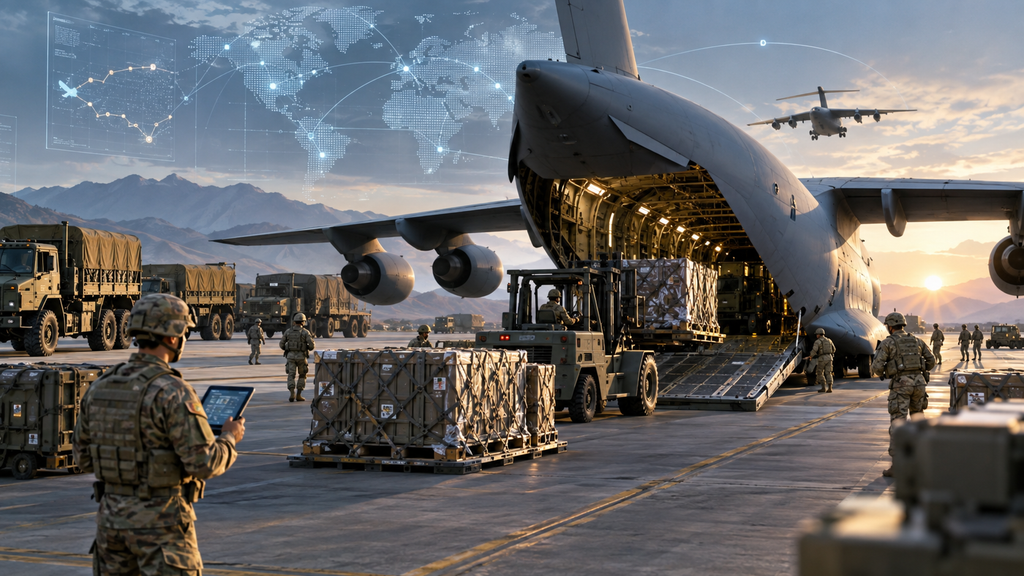
U.S. Transportation Command is using artificial intelligence to tackle a problem that sounds almost backwards for modern logistics: making military supply routes less predictable.
Gen. Randall Reed, commander of U.S. Transportation Command (TRANSCOM), said the command is moving toward “sustainable, randomized push logistics” to make it harder for adversaries to track and disrupt the movement of critical supplies. He outlined the approach during the DefenseTalks conference on September 22.
The concept is part of a trend of concern within the military logistics community. Efficient systems can rely on regular delivery times or ‘windows’ and on optimized routes. But in a competitive world, it can be a disadvantage if the competition learns the patterns by studying them with AI.
Perfect logistics target using AI
Traditional supply chains are built to remove waste and make deliveries as efficient as possible. Military logistics has many of the same goals, but the consequences of being predictable can be far more serious.
Reed said adversaries could use AI to identify patterns in military transportation and interfere with logistics networks. He described hostile AI as capable of multiplying disruptions and potentially pushing logisticians toward what he called “catastrophic decisions based on hallucinated intelligence.”
TRANSCOM’s response is to introduce controlled unpredictability. AI can optimize routing to avoid the typical path and traditional delivery timelines, making the most of alternative routes and adapting delivery schedules as needed. The idea is to create uncertainty without being random, but to keep supplies moving.
AI changing the way supply routes react
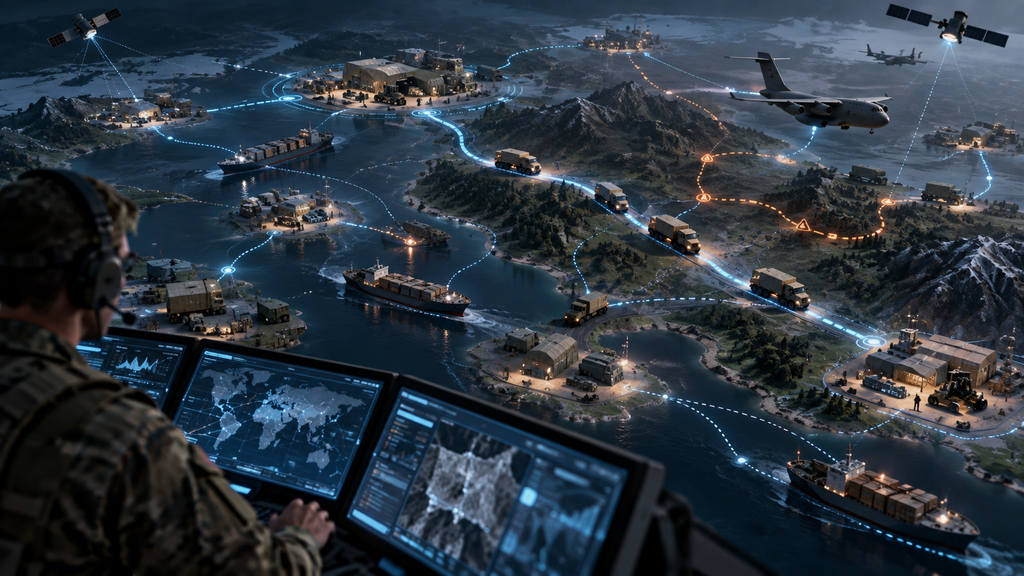
Reed said AI could help TRANSCOM randomize routes, reduce the mental workload on personnel, and anticipate operational problems before they occur. The command is also looking at predictive demand planning and “network healing” — systems that can adjust logistics networks when physical routes or communications are disrupted.
Several technologies fit into this broader approach. Internet of Things sensors can monitor cargo while it is moving. Digital twins can create virtual representations of logistics networks, allowing planners to model conditions digitally. Blockchain-based systems can also be used to protect logistics data from unauthorized manipulation, according to Reed.
For a normal person, the concept is relatively simple: instead of AI merely finding the fastest way to move something, it can help find a way that is both efficient and harder for an opponent to anticipate.
TRANSCOM has already been using AI for less dramatic logistics tasks. In 2025, the command described AI applications including freight-delivery prediction, a document-based internal chatbot and predictive vessel tracking. Its data teams have also worked on sentiment analysis for military household-goods programs.
The hardest part of AI Logistics
The bigger challenge is building the data infrastructure needed to make these systems dependable. Reed identified data scarcity, flawed synthetic data and the need for significant computing power as major obstacles. TRANSCOM is building what he described as a secure, authoritative data layer so AI systems can work from trusted information during disrupted operations.
That matters because an AI system making decisions from incomplete or corrupted logistics data could create exactly the kind of vulnerability TRANSCOM is trying to avoid.
The U.S. Army is pursuing related work as well. Its PORTAL program calls for AI-enabled logistics software capable of operating in contested environments, tracking supplies in real time and generating logistics options even when communications are limited or disrupted.
The new mission for TRANSCOM is not just to integrate AI into military logistics, though. It is a matter of establishing supply lines that will be able to evolve and adapt when the other side works to anticipate, interfere with, and influence them.
Moving forward, these AI-based systems will rely on whether they can effectively function in the real world with minimal communications, trusted data, and sufficient computing power. This will be the deciding factor as to how far randomized logistics will become part and parcel of military transportation.