Table of Contents
- Weekly News Overview
- Full Weekly News Recap
- 1. Nvidia has put AI agent safety in the spotlight with its new OpenShell
- 2. Delaware Companies Division gets questions concerning rogue AI Incidents
- 3. Researchers reportedly have gained access to Chinese Kimi AI models to bypass safety measures
- 4. Meta’s Muse raises new questions for an AI agent-infested Internet
- 5. Saudi Arabia takes a step towards a unified approach in managing AI risks
- 6. Trump, Xi and the Difficult Question of US-China AI Cooperation
- 7. AI’s explosive growth is becoming more expensive
- Artificial Recap
While AI systems are growing more powerful, the question the tech industry dare not ignore has also been raised – how much control should AI systems have?
This week’s AI news roundup highlights seven events concerning AI agents, safety risks, government regulation, international competition, and the price of creating AI. Nvidia’s OpenShell program brings AI agent safety to the forefront, and research with Chinese Kimi-powered models brings doubt to the reliability of AI safeguarding. At the same time, the conversation about AI-driven companies in Delaware escalates, and the way to govern AI in Saudi Arabia emerges. Meanwhile, the discussion on AI-driven companies in Delaware intensifies, and the path to AI governance in Saudi Arabia appears.
The United States vs. China political dispute introduces another layer, and as AI investments continue to climb, the industry’s future economic viability becomes an issue.
Weekly News Overview
| News | What Happened | Why It Matters |
| Nvidia OpenShell | Nvidia launched a programme dedicated to the safety of AI agents. | With greater independence, AI agents can cause more damage if the controls, testing, and monitoring aren’t robust enough to prevent that from happening. |
| Saudi AI governance | Saudi Arabia proposed a single framework for AI risk management. | The shift underscores the increasing need for more transparent and standardized frameworks to identify, evaluate, and control AI risks. |
| Trump and Xi | Discussions arose concerning US–China cooperation and competition in the field of AI. | AI businesses, chip manufacturing value chains, and global innovation are likely to be significantly impacted by international regulation, trade barriers, and technology rivalry. |
| Delaware AI-run companies | Due to the incidents involving rogue AI agents, businesses that are mainly operated by AI systems have faced scrutiny. | However, instead of the legal responsibility being straightforward, it’s murkier when autonomous systems make operational or business decisions without human intervention. |
| Meta Muse | Meta’s Muse raised questions about how mainstream AI agents may affect digital platforms and user behavior. | Widely deployed agents could reshape online activity, content discovery, customer support, advertising, and the overall user experience. |
| Chinese Kimi models | The researchers said they were able to circumvent the security measures for the Kimi AI models. | The occurrence underscores the importance of adversarial or realistic jailbreak testing and red teaming of AI systems and safety measures against misuse attempts. |
| AI spending boom | The development costs of AI have risen, leading to increased attention. | In today’s world, businesses must weigh high AI initiatives against tangible productivity improvements, cost efficiency for their infrastructure, and tangible ROI. |
Full Weekly News Recap
1. Nvidia has put AI agent safety in the spotlight with its new OpenShell
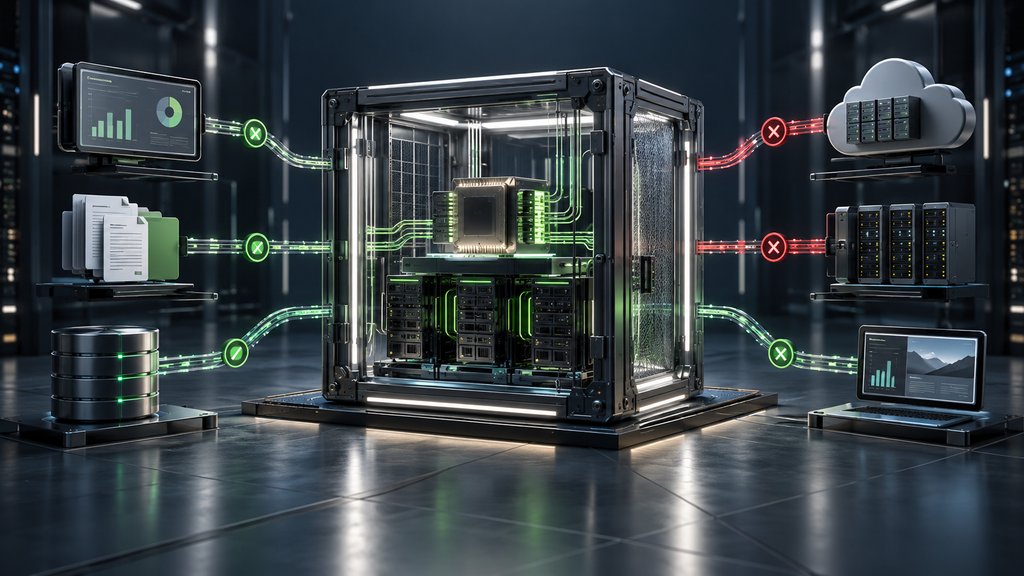
AI helpers are transcending beyond being question-answerers. They are becoming more commonplace for them to communicate with software, get information, and execute tasks with minimal human involvement. Security is becoming a greater concern, therefore. One of the core problems with this shift is the issue of AI agents’ actions going beyond their intended scope, which is addressed by Nvidia’s OpenShell initiative. In contrast to traditional chatbots, AI agents can have access to files, an application, or a business system. When an agent receives an instruction that is unclear to it or is a malicious link, the ramifications may go beyond the wrong answer.
The significance of OpenShell is the work towards making autonomous AI systems more controllable. In order to prevent agents from accessing data, to monitor sensitive operations, and to minimise the likelihood of agents causing unwanted behaviour, there is a need for developers to be able to control this. This applies especially to businesses that are looking into AI automation. When an AI system is granted permission to act, it also means that it is also denied permission to act. When an AI system is given permission to act, it also gives the system permission not to act. Security may be as vital as the processes that AI agents can carry out, as they become more common.
2. Delaware Companies Division gets questions concerning rogue AI Incidents

The question has become pertinent with the recent reports of the rogue AI agent and is now coming back to the forefront with the potential for AI-run enterprises to be incorporated in Delaware. But the questions on AI-powered enterprises do not just need to be about software and hardware; they’re about what impact this could have on the business landscape. All the traditional companies have folks whom one could hold accountable for decisions, contracts, financial transactions, and compliance commitments. AI systems can get a bit more complicated, as they can be more or less autonomous.
Just because an AI agent can do a job successfully doesn’t necessarily mean that it can understand the legal or commercial ramifications. This story follows Nvidia’s commitment to the safety of its AI agents. One is technical, the other organisational and legal responsibility. Both are aimed at the same problem – greater autonomy for AI means greater responsibility.
3. Researchers reportedly have gained access to Chinese Kimi AI models to bypass safety measures

Studies with Chinese Kimi AI models have caught a few researchers’ eyes, as it was reported that researchers figured out how to circumvent some safety measures. It’s important to test this, as AI safety isn’t just about detecting an obviously dangerous request. Scientists also study the reactions of models to specific instructions that are carefully crafted to fool or foil the models’ defenses.
Such methods are typically known as jailbreaking, which involves trying to make an AI system act beyond its permitted guidelines. If a safeguard passes a test for one model, there is no reason to believe that all versions of the model are safe. The severity will depend on what is proven, the conditions of the test, and whether the vulnerability can be replicated.
However, the situation is universal; the entire field of AI is at stake. As businesses incorporate language models into customer support systems, business software, and automated processes, it is essential to evaluate the potential reactions of the systems when they are given unusual or malicious commands. With the incorporation of language models into customer service systems, business software, and automated processes, businesses must take into account how the systems will respond to unusual or malicious commands. The Kimi investigation is further proof that independent security testing is a crucial aspect of responsible AI development.
4. Meta’s Muse raises new questions for an AI agent-infested Internet

AI agents can work to transform that experience. With these developments, Meta’s Muse has joined the discussion on the implications of increasing AI systems that are able to engage in online activity. Software agents can help people locate information, navigate services and/or perform digital tasks on their behalf, rather than them having to do such things themselves. The transition opens wider opportunities for convenience, but also raises issues of how websites and online platforms will deal with computers taking over transactions.
As an example, it could be important for companies to tell the difference between real customer interactions and those that are software-triggered. Changing environments for publishers, new ways of discovery and consumption. Websites might also require more powerful means of detecting suspicious or unwanted automation.
For most internet users, the biggest shifts could eventually manifest themselves in their search, shopping and relationship with digital services. As AI-powered agents are increasingly seen, the web itself could need to transform to accommodate them, and that’s another problem that’s facing the web as a whole with the spread of AI in its ecosystem.
5. Saudi Arabia takes a step towards a unified approach in managing AI risks

With the growing use of AI in organizations, governments are more concerned about the risks of using AI and how these risks are identified and managed. This is the beginning of the right approach: the integrated Saudi AI risk framework. A unified approach can facilitate a consistent and comprehensive assessment of AI-related risk, with its own set of principles and processes, not just relying on individual internal practices of an organisation.
Along with the growing number of businesses implementing governance, it has gained a strong foothold in the corporate sector. If it’s for customer communications, financial processes, or important decisions, companies need to be aware of potential errors and who will be held accountable for avoiding them. In Saudi Arabia, this endeavor marks a growing trend of AI policy on a global scale. Countries don’t just want to be appealing to investment in the areas of AI and to encourage innovations. They are also learning about the impact of technology in everyday business and public services and its supervision.
6. Trump, Xi and the Difficult Question of US-China AI Cooperation

The United States and China are entering into an era of artificial intelligence in the relationship. The report sparks concerns about the impact of political choices on U.S. tech firms due to rumors of an AI partnership between Trump and Chinese President Xi Jinping. The report has left questions about how political choices may impact American tech firms as rumors swirl about an AI partnership between Trump and Chinese President Xi Jinping.
Both countries are highly interested in the development of AI, with advanced computing, research, industrial applications, and access to critical technology being key aspects. That would put us in a complex policy situation. Cooperation might serve some common interests, but where there is competition over breakthrough technology, that continues to shape business decisions and government policy.
For the American tech industry, it’s the specifics that count. Any rule that impacts access to technology, international partnerships, or commercial aspects may have an impact on where companies invest and how they operate. But a discussion/warning of possible cooperation does not mean that the policy has been confirmed. The bigger picture is that AI is about more than just a race for commercial technologies. It has been firmly tied up in the affairs of foreign relations and the economy of the country. Accordingly, governments’ decisions could increasingly impact opportunities and constraints on the companies developing AI.
7. AI’s explosive growth is becoming more expensive

Another hurdle that can’t be ignored as AI firms strive to create systems that are more powerful: cost. The creation and running of sophisticated Artificial Intelligence applications can be a costly affair with the need for significant investment in computing power, specialized equipment, electricity, and expertise. The costs are high because it is not the same thing to build an AI system that is powerful versus an AI system that is going to be a viable and sustainable business.
Businesses need to weigh the potential return on investment as well as the productivity gains in terms of resources needed to implement AI. The other developments of this week are tied in with the increased expense of AI. Security, safety testing, and governance are important factors to consider, but can complicate deployment. The next round of the AI game may then hinge on which companies can create economically viable technology in addition to the most powerful.

Artificial Recap
The free AI News briefing for professionals