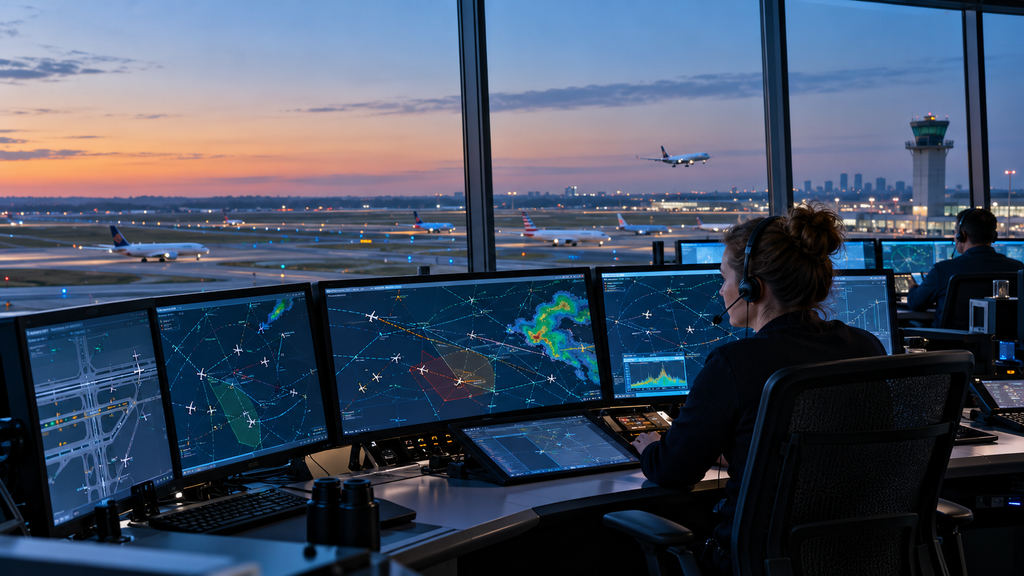
The FAA is positioning AI in the middle of one of the most complex systems in the world – U.S. air traffic control. The idea isn’t to take the place of air traffic controllers, but to provide controllers with a much more accurate idea of where congestion, bad weather, and capacity issues may occur before they negatively impact flight operations.
The shift is part of the Federal Aviation Administration’s efforts to upgrade the nation’s outdated air traffic control system amid surging demand for air travel. The agency is already investing several billion dollars in modernization and is pushing more technology and improvements in infrastructure.
The FAA wants to identify issues with air travel before they occur
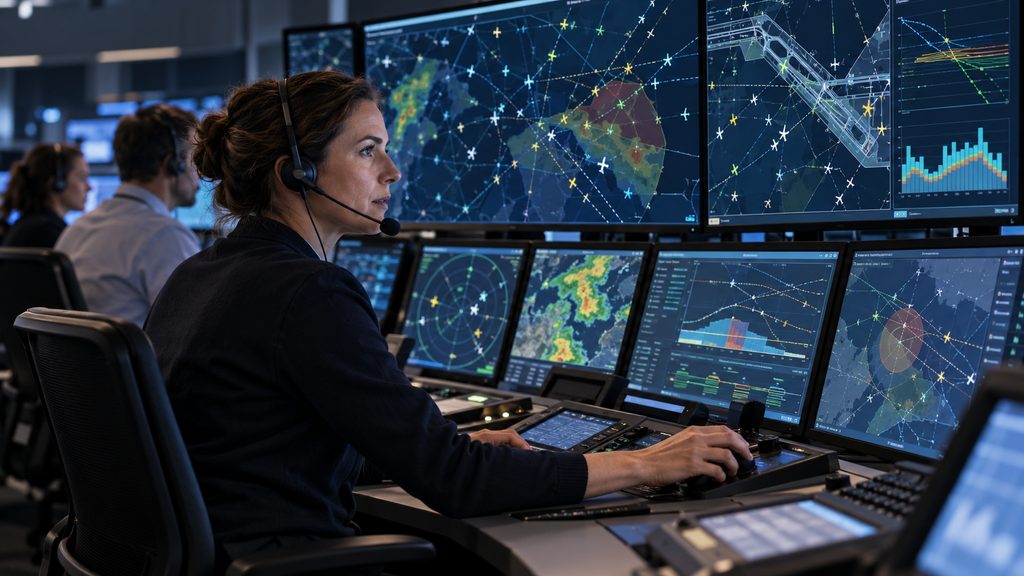
According to the FAA, SMART combines approximately 200 data streams, such as weather, flight paths, traffic flow, airport capacity, and controller staffing. It’s then fed into its AI-powered engine, which can predict possible congestion and conflicts before they get any bigger.
Predictions can also be used by traffic managers to alter the departure times, routes, and other aspects of a flight’s path before the aircraft is facing delay. This should help to minimize delays, cancellations and inefficient flight paths, the FAA says.
Air Space Intelligence is awarded by the FAA an $875m, 12-year contract for 12 projects of the modernization. The company’s software will be used to assist in the coordination of schedules and trajectories prior to take-off.
This AI is Not The Controller
What it is not meant to do may be the most salient feature to the passengers. While the ATC is still expected to make real-time decisions. The software from Air Space Intelligence is designed to manage airspace, routes, and schedules, not to take the place of human control. It’s a distinction that can make a difference given aviation’s limited space for software that makes a prediction and executes on it without any supervision. The FAA itself admits that the use of AI is a new safety problem because some AI systems are data-driven rather than being completely based upon rules that were designed by human engineers.
The agency has been working on a roadmap on how to safely implement AI in aviation. Scientists are already devoting attention to that issue. Researchers at the University of Cincinnati are testing how reliable and safe AI systems are in aviation in partnership with Washington Dulles, the university says.
Whether AI could manage America’s airspace will be the real test
The FAA’s AI initiative is more than just a single software solution. The agency is also striving for air traffic control modernization that spans the entire system, such as the development of the common automation platform, which would give controllers a unified interface throughout the system. It is also progressing towards cloud-based infrastructure and digital communications. But the big problem remains: trust. It is never enough to have a system that is effective in normal operating conditions. It must be dependable when the weather suddenly changes, the airports are saturated, or unforeseen issues can crop up anywhere on the network.
The FAA’s modernization program has already been subject to investigation by the Government Accountability Office, which has cautioned that the agency is moving forward with its modernization program at a fast pace, which poses risks if costs and schedules are not well defined. The promise to travelers is simple: Less needless delay, more predictable flights – and a smarter use of the airspace around the world. The FAA is placing its faith in AI to spot issues before they reach the point of being dealt with by controllers. A reliable, scalable technology, if it can be achieved, could be one of the biggest changes to U.S. air traffic management in decades.