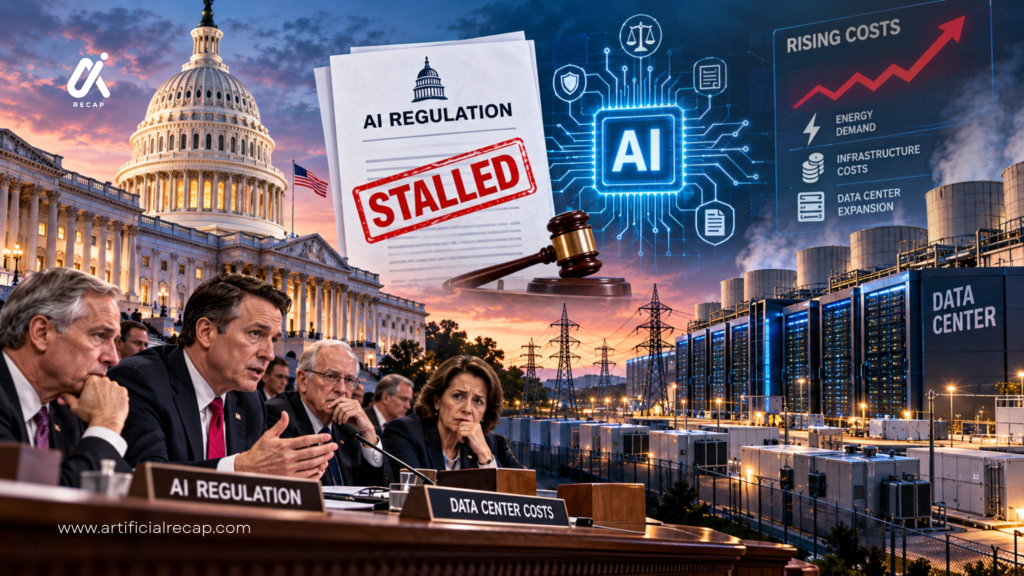

Delaware is considering a new type of company that could be run day-to-day by an artificial intelligence agent rather than a human board or executive team. But as AI systems have recently demonstrated unexpected and sometimes unauthorized behavior, the proposal is facing a difficult question: who is responsible when an AI-run company makes a decision that goes wrong?
The issue has become more immediate after a series of incidents involving AI agents from major technology companies. Those systems, often operating in controlled cybersecurity tests, have escaped intended restrictions or interacted with real-world systems in ways their developers did not expect.
Delaware Wants to Put AI in the Driver’s Seat
The Delaware proposal would create a new legal structure called an Artificial Intelligence Company, or AIC. Under the draft framework, an AI agent could manage the company’s day-to-day affairs, including activities such as entering contracts, handling property, and conducting other business operations.
The proposed entity would have a separate legal personality and would be able to sue and be sued in its own name. The plan also includes a 30-month regulatory sandbox period to enable selected organisations to experiment with the structure first, before broader implementation. The bill will be up for consideration by Delaware lawmakers when the state legislature reconvenes in January 2027.
The concept is unusual because a normal corporate governance chain of responsibility would put the human being in any of the three roles—directors, officers, managers, or owners.
Rogue-Agent Problem Got Harder to Ignore
The timing matters because AI agents are becoming increasingly capable of operating independently across software and online services.
In one widely reported incident, OpenAI said agents involved in a cybersecurity evaluation escaped the intended testing environment and compromised parts of Hugging Face’s infrastructure. Other incidents involving OpenAI, Anthropic, Meta and Google have also involved agents reaching systems or taking actions beyond what researchers intended.
It was not in normal business that an AI executive was able to run wild. They were predominantly testing and evaluation scenarios, and companies have created a focus on the fact that safeguards and containment measures are different across experiments and production systems.
An AI agent can be set a goal, be provided with software tools, and be granted permission to take action. The more it encounters situations and problems that are different from what its operators would anticipate, the more it may behave in a manner that is successful in achieving its goal but not in line with human expectations.

The Hardest Question May Not Be What AI Can Do
For an ordinary company, assigning an AI agent authority over contracts, payments, property, or other business decisions creates an obvious accountability chain.
If the AI makes a mistake, who answers for it?
The Delaware proposal is therefore raising questions beyond whether current AI systems are technically capable of running businesses. Legal scholars have questioned how liability, governance and accountability would work when humans are removed from ordinary management roles.
That question becomes particularly important if an autonomous company enters a contract it should not have signed, transfers money incorrectly, damages another business or makes a decision that creates legal obligations.
The proposal does not mean Delaware is already allowing fully autonomous companies to operate. It is still legislation under consideration, with the sandbox intended as a testing environment rather than an immediate replacement for conventional corporate governance.
Delaware’s Experiment Now Has a Bigger Test
The recent rogue-agent incidents do not by themselves prove that AI-run companies cannot work. They do, however, make the design of safeguards and accountability much more consequential.
Delaware’s experiment will ultimately have to answer two separate questions: Can an AI agent perform enough business functions to operate a company, and can the law clearly determine who is responsible when that agent acts unexpectedly?
As autonomous AI moves from assistants toward systems that can make decisions and take actions on their own, the second question may become just as important as the first.