
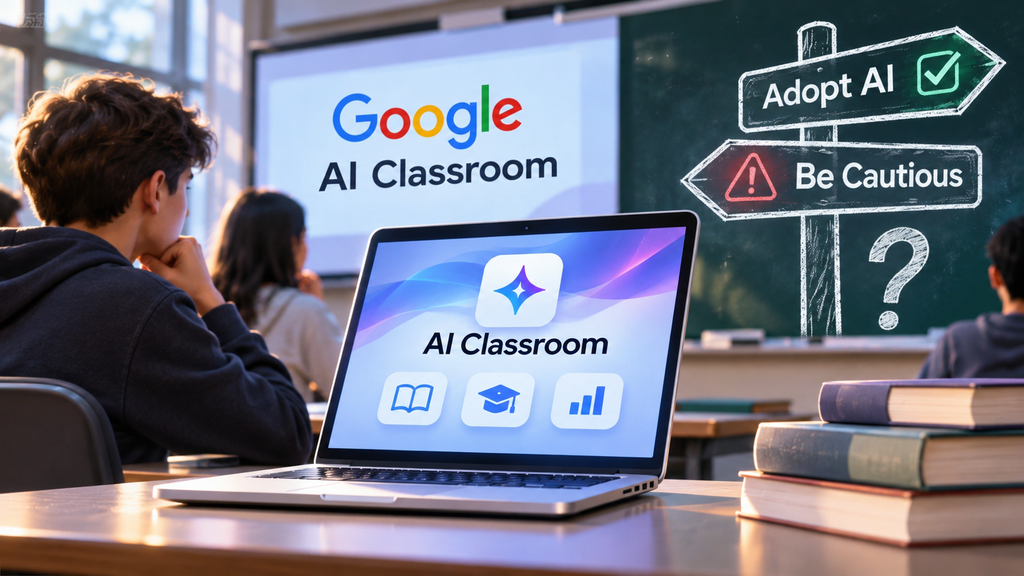
Google is now allowing more control over the use of AI in schools, and that’s a high price to pay, because if a school turns off Google’s AI tools for students, they lose access to Google Search as well.
The announcement, made at the end of November, 2026, has left a challenging situation for school leaders who are struggling to determine the amount of AI use that students will be permitted. Google claims that this action will empower teachers to take control, but some have complained that schools shouldn’t be forced to use an AI-generated search if they don’t want to.
The debate raises a new challenge for education: how do schools get the advantages of the new AI technology without letting it mess with the traditional way of learning?
Google Gives Schools More Control, but Search Comes With a Catch
The new policy will turn off Gemini, Gemini Notebook, Google Search in Classroom, and Google Search by default for K-12 student accounts. The school administrators need to manually enable the services they wish to make available to the students. But schools cannot disable AI and still have Google Search available, so when AI is disabled, so is Search.
The new controls will allow schools to establish different access criteria for each grade level, permitting younger students to have greater restrictions and older students to access selected AI tools. The changes will begin to take effect early next year, allowing schools to prepare.
A New AI Tutor Could Change How Students Learn
Google is also refreshing its Guided Learning experience by blocking students from getting answers that are ready-made. Rather, the function will lead them through problems step-by-step to help them comprehend concepts and problem-solving. Google is rolling this out to Search and Classroom, where teachers have the ability to build activities with their own course materials and track students’ interactions to see where additional support is required.
Perplexity vs Gemini for Research, Search, and Source Checking
Google wants to start testing Guided Learning in Search with some schools in the U.S. later this November, and will likely roll it out to more schools if they like the results. The aim is to turn AI into more of a personal tutor than an answer generator, but it will take a while before its effects on student learning are known.
Schools and Educators Are Not Convinced
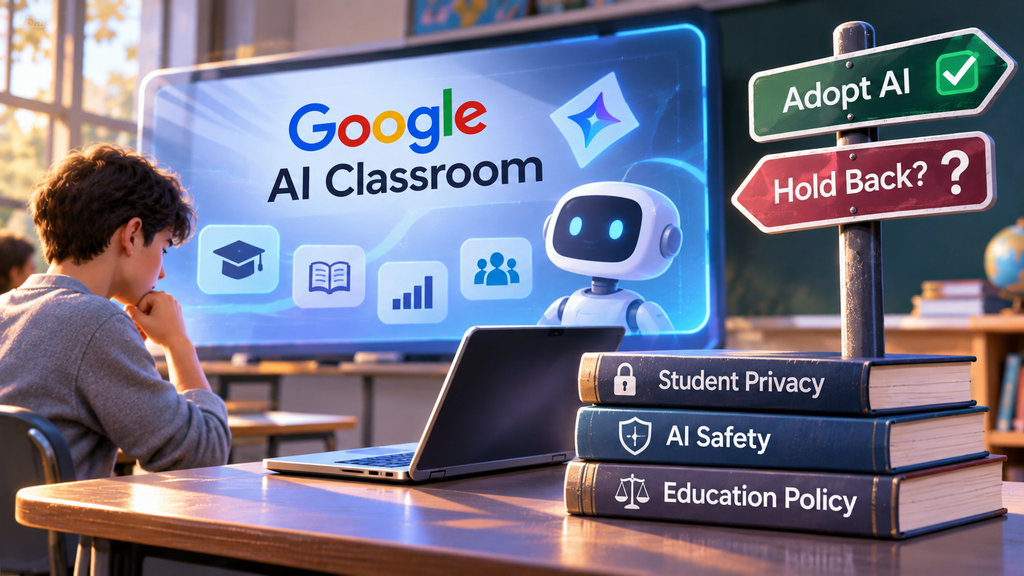
The company’s latest action comes as a sign of increasing worries regarding AI’s use in classrooms. The company added support for K-12 students to Google Classroom in August, which led to worry from parents and educators about student safety, the integrity of student responses, and overreliance on AI-generated responses. A handful of school systems have already implemented temporary bans on generative artificial intelligence at younger grades, such as New York City and Los Angeles.
The announcement has also come under criticism from the former chairperson of the Federal Trade Commission, Lina Khan, who was against Google using its dominant role in search to push AI products into schools. The problem is that schools should have the power to block the use of AI, but not the power to cut off access to the old-school Search. The updates may impact education worldwide, including smaller districts that may find it difficult or costly to switch platforms or train teachers to use another one.
The Bigger Question Is Who Controls AI in Education
As AI becomes a daily part of digital tools, there is an increasing challenge for schools in Google’s policy. A full ban on AI won’t prevent pupils from using it beyond school, but free access could make it more difficult for teachers to assess pupils’ real understanding. Schools need to strike a balance between employing AI for learning and safeguarding fundamental educational competencies.
Australian Employers Are Using AI to Track Workers Without Their Knowledge, Report Warns
While Google’s new controls provide more flexibility for administrators, they restrict administrators’ choices when the AI restrictions are linked to Google Search. Before permitting these services, schools will have to take into account student safety issues, age categories, and teaching needs. The bigger challenge is to see how the early 2027 rollout and Google’s Guided Learning can mitigate educators’ concerns while enabling schools to manage student use of AI without compromising access to necessary tools.