Table of Contents
- Weekly AI News at a Glance
- Full Weekly News Recap
- 1. Trump’s new AI task force is placing national security in the spotlight
- 2. The AI Chip Business is Back on Track with Meta Muse’s New Products
- 3. FAA is turning to AI to enhance air traffic control and minimize delays
- 4. Ex-OpenAI Researchers Concerned about Understanding AI Reasoning
- 5. TikTok continues to work on transparency of its AI features as synthetic content proliferates
- 6. China introduces new AI guidelines to balance growth and risks
- 7. Zuckerberg, Musk and Altman’s AI anxiety as Hollywood’s focus on them shifts
- Artificial Recap
21st-century technology news was once again a testament to how far artificial intelligence has come in this week’s reports; in so many aspects of life, it’s everywhere now. AI is no longer just being considered a technology to answer questions; it’s a tool that’s becoming a key part of national security in Washington and is being considered essential infrastructure for systems to be modernized, among other use cases.
A key week issue also was a balance of innovation and oversight. China set new guidelines for the development of AI’s economy, TikTok stepped up its AI-generated content policy, and some former OpenAI researchers shared worries about comprehending the reasoning behind advanced systems’ answers.
In the meantime, though, the attention turned to the AI chip business of AMD, which was desperately in demand, as well as Hollywood’s depiction of top technology executives, in the midst of the general public’s growing unease over the power of the tech industry.
Let’s take a closer look at seven trends that are driving the AI conversation, learn about the significance of each, and what to expect next in the reading list.
Weekly AI News at a Glance
| News | What Happened | Why It Matters |
| Trump’s AI task force | A reported plan would put senior intelligence expertise at the center of a new AI task force. | National security could play a greater role in AI policy. |
| AMD and Meta Muse | Interest in Meta’s Muse is drawing attention to AMD’s AI chip business. | AI competition increasingly depends on computing hardware. |
| FAA explores AI | The FAA is improving air traffic control with the use of AI. | Flight delays can be reduced by using AI-automated systems. |
| OpenAI research warning | Former researchers raised concerns about losing visibility into AI reasoning. | Understanding AI behavior is important for safety. |
| TikTok’s AI safeguards | TikTok continues to work on transparency and safety tools for AI content. | Users need clearer ways to recognize synthetic media. |
| China’s AI guidelines | China is managing the task system while continuing to innovate AI | Economic growth and technology are being linked in this matter |
| Hollywood confronts AI power | A Hollywood project puts prominent technology leaders and AI-related concerns in the spotlight. | Public debate about the influence of technology companies is expanding. |
Full Weekly News Recap
1. Trump’s new AI task force is placing national security in the spotlight
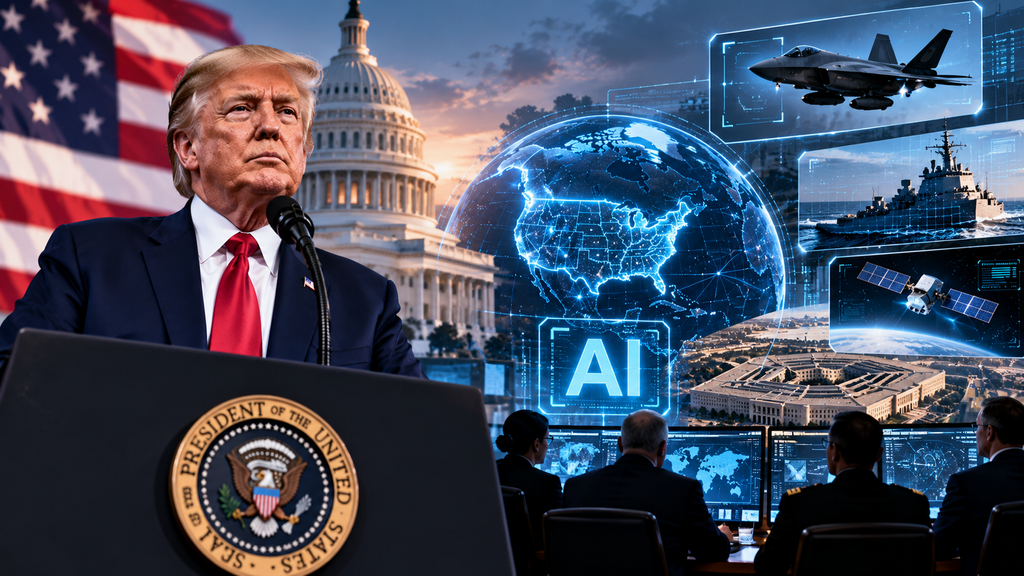
In fact, AI is growing into a major element in national security deliberations in Washington, and the Trump administration is reportedly aiming to appoint a “high-level intelligence official” to lead a new AI task force. The development implies that in the future, more and more decisions on advanced AI will be made based on intelligence, cyber-security, and national security skills in addition to traditional technology policy. Governments are also turning to AI to improve intelligence analysis, Cyber defence and military planning – previously thought to be the domain of the consumer chatbot and business software.
The U.S. is in a tricky position to promote U.S. innovation in the field of AI while also mitigating its potential security risks. The proposed task force may play a significant role in this initiative, but will have limited impact if it has limited responsibilities or authority. A more fundamental issue for companies and developers is whether the broader national security goals will eventually influence the guidelines for the development of advanced AI technologies.
What to look for: The formal leadership, responsibilities, and influence on future AI policy of the task force.
2. The AI Chip Business is Back on Track with Meta Muse’s New Products
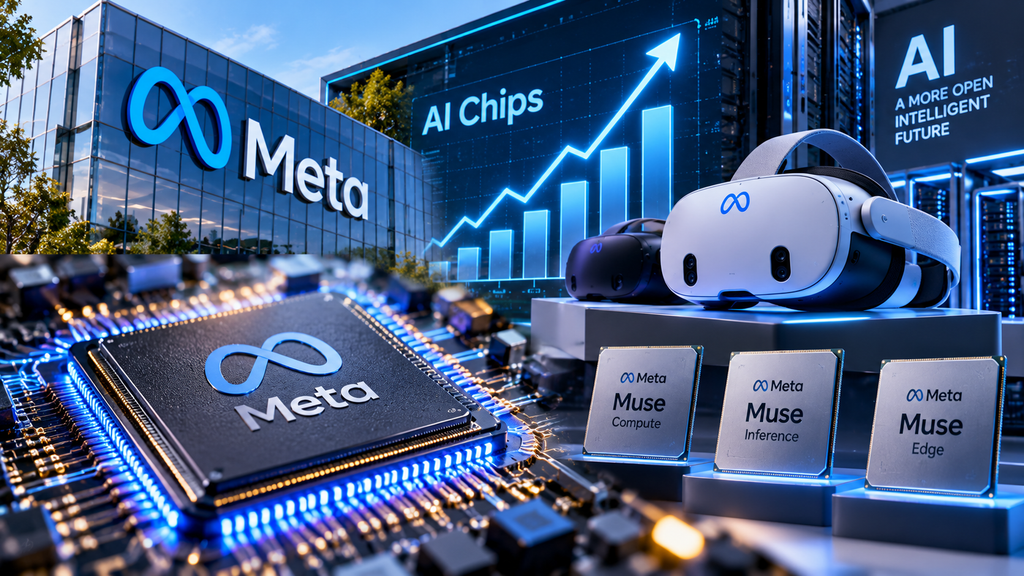
The battle for these super-strong AI systems is also giving rise to opportunities for companies that make the hardware that powers them. Due to the rise in popularity of the advanced artificial intelligence processor which is used to run the company’s Muse, AMD is once again the focus. AI chips are responsible for carrying out the vast number of calculations needed to “learn” AI models and provide results back to users.
The firms providing the computing power are increasingly important as the uses of AI continue to grow and develop. The interest in Muse points to an opportunity for AMD in a market of great interest where AI infrastructure is a key industry focus. But just because the attention is increased does not mean that more hardware will be sold, customers will be willing to pay more, or that the demand for AMD will be sustained over time. It’s the larger picture that’s farcical, as chip makers, cloud service providers, and data center operators are all contributing to the potential for AI technologies to be widely adopted.
What to look for: Will the growing use of artificial intelligence applications drive continued growth in hardware and commercial success for AMD?
3. FAA is turning to AI to enhance air traffic control and minimize delays
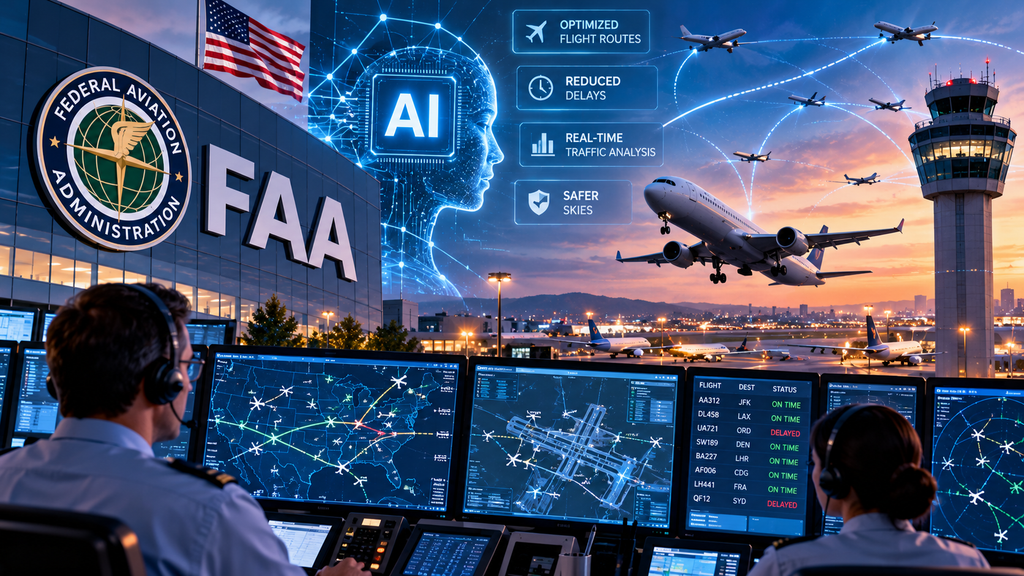
The implications of AI are not confined to tech firms, however, but are also garnering interest in one of today’s most intricate sectors of transportation: To improve air traffic control and cut flight delays, the Federal Aviation Administration (FAA) is moving into the future with the use of artificial intelligence. The control of air traffic is complex, as it requires coordination of aircraft movements, adaptation to the changing situation, and the necessary decision-making with regard to safety. However, AI might play a role in helping to identify patterns within the vast operational data, which could aid in improving planning and decision-making.
The immediate impact on passengers is the reduction of delays and a smoother overall flying experience, whereas for airlines and airports there would be gains in efficiency, not least in times of peak travel and in complex scheduling scenarios. Yet, the application of AI in aviation has a way to go before it can be used with great prudence. Any new system needs to comply with stringent safety standards, and the performance of the system needs to be proven before it can be trusted with critical tasks. The FAA’s project is a good example of how AI is now making the transition to applications where reliability is as important as speed.
What to look for: testing of AI tools, what tasks they get, and whether any measurable flight operation improvements result from the use of AI tools.
4. Ex-OpenAI Researchers Concerned about Understanding AI Reasoning
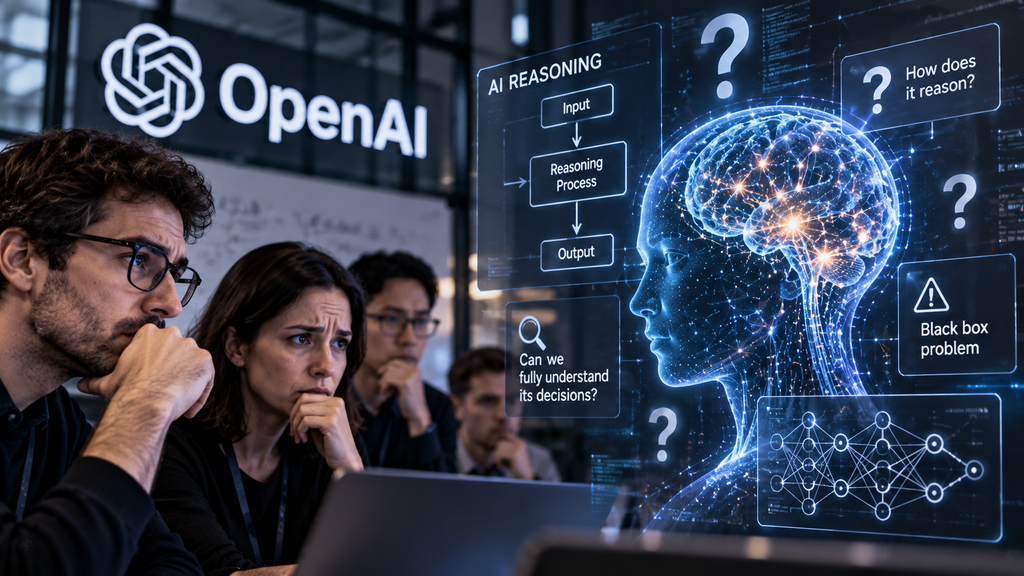
With advances in AI capabilities, a fundamental question is how to make sense of what is happening in these systems. A number of former OpenAI researchers, who are said to have been fired, have issued a warning to the company that it is in danger of losing the chain of thought in its AI. In AI research, the term chain of thought typically denotes the intermediate steps a model can output as it tries to solve a problem, and these are subject to analysis to provide insights into how a system performs on a task. The worry is that as this logic becomes less apparent and less descriptive, it might be more difficult to uncover some issues in AI systems.
It is not true that an AI that gives a believable answer is one where the behavior is completely known. There’s a big catch, too, and that is that visible reasoning does not guarantee a complete and accurate account of the reasoning of a model that leads to an answer. As AI systems grow more sophisticated, the researchers’ warning highlights a general challenge in the field of AI safety: how to effectively assess these growing systems.
What to look for: If AI creators find more effective ways to investigate the behaviour of their models and to evaluate the trustworthiness of the safety checks based on reasoning.
5. TikTok continues to work on transparency of its AI features as synthetic content proliferates
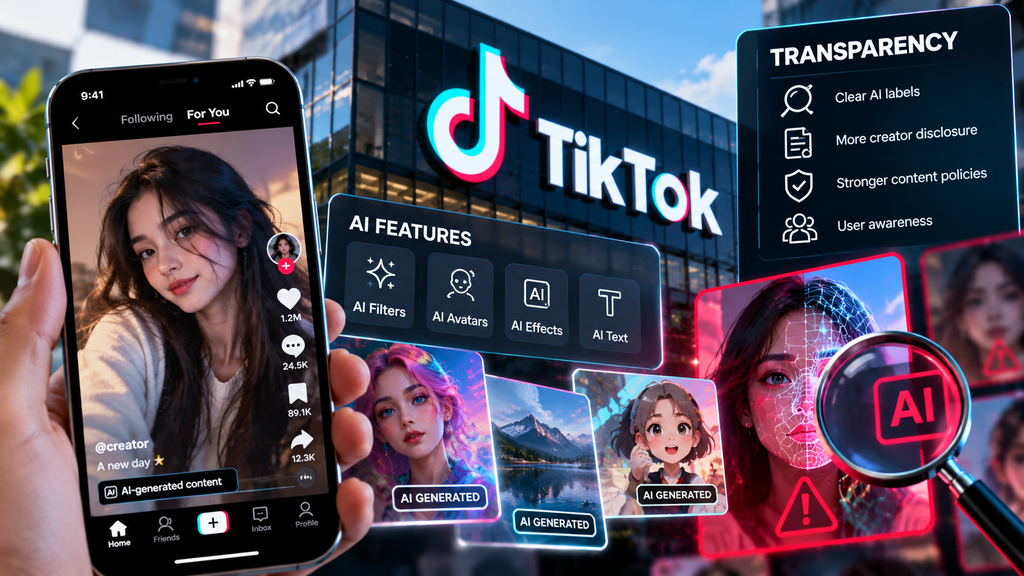
The ever-closer approximations of reality in the images, videos, and sounds produced by AI are making it difficult to tell the real from the fake. To help people navigate TikTok content generated or edited with artificial intelligence, TikTok is enhancing its AI transparency and safety measures. It’s particularly important on social media, which can instantly reach a large following, and sometimes individuals may not know how the video was created. While there are numerous ways that AI-generated media can be used to create art, entertainment, and educational content, the issue is that AI-generated content can be a source of confusion when it’s recorded as the voice of a real person or event.
Making it clearer, viewers will be better informed in their choice of information displayed. Further, transparency introduces many questions about differentiating between AI-generated and creative content and not de-motivating human creativity. The move represents greater recognition that the platforms need to take note of both their audiences’ consumption of AI-generated content and the content they’re producing.
What to look for: How well transparency features work in the actual classroom.The effect of the transparency features in daily use.
6. China introduces new AI guidelines to balance growth and risks
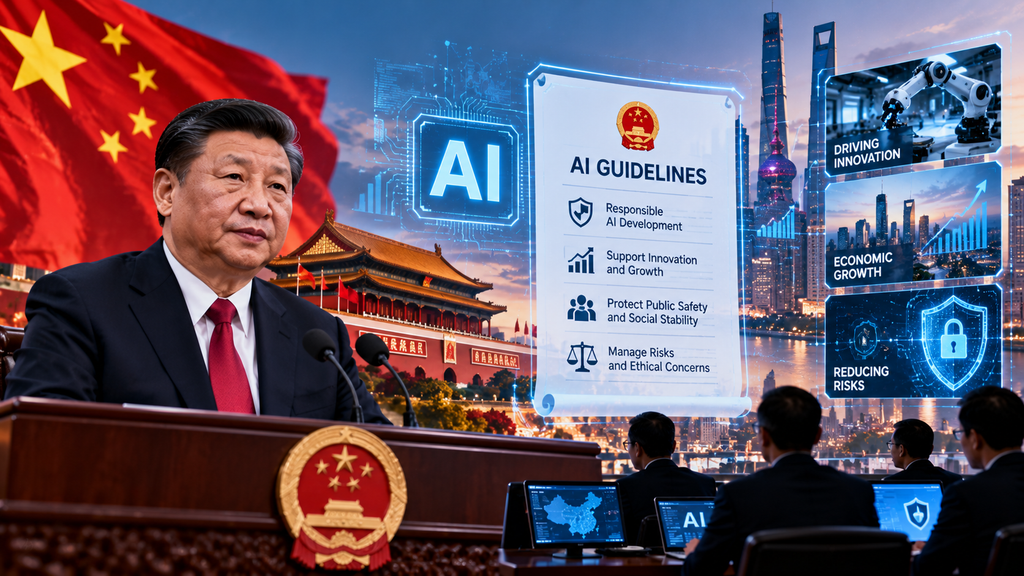
Whereas the United States is focusing on the national security aspects of AI, China is highlighting the role of AI in economic growth and risk management. China has released new guidelines for the economy that incorporate artificial intelligence, aimed at stimulating innovation and mitigating the risks of the technology. The strategy is representative of one of the challenges for governments around the world: how to foster the creation of an economically useful technology without leaving the risks uncontrolled. It’s possible to use AI in manufacturing, business services, research, and other areas, and more widespread adoption would enhance productivity and open up new commercial opportunities.
Meanwhile, the governments should take into account the protection of data, reliability, security, and economic impacts of technological changes. The information provided in these guidelines may impact future plans and investments for companies that either are in or engage in activities in China. The announcement is also a sign of how AI policy is increasingly intertwined with the wider economic strategy. The key is how these goals will be put into action and what impact they’ll have on companies creating or implementing AI.
What to look for: Details on implementation, business needs, and the progress of China’s commercial innovation and technology oversight.
7. Zuckerberg, Musk and Altman’s AI anxiety as Hollywood’s focus on them shifts
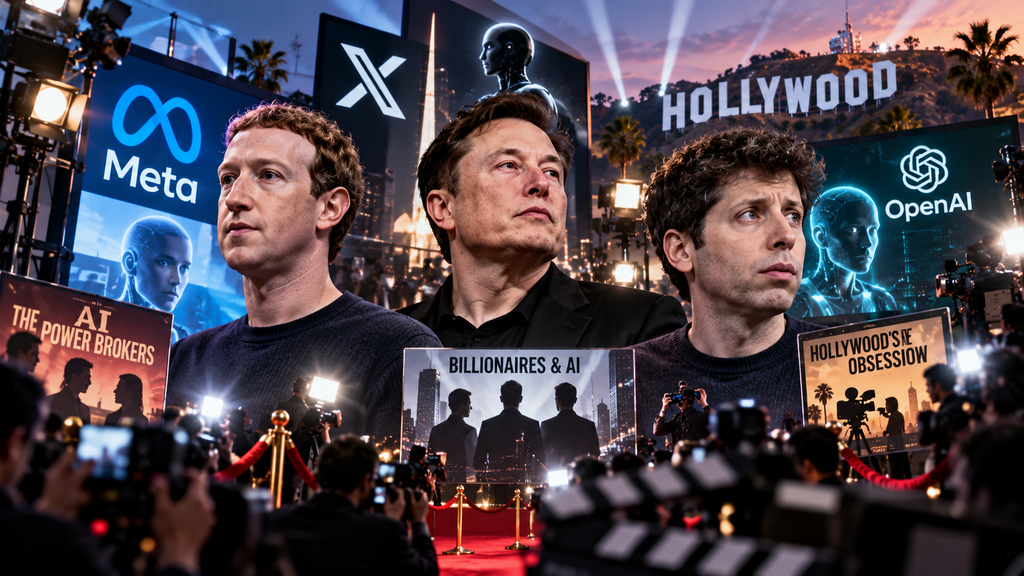
Artificial Intelligence isn’t modifying only technology and government policy; it’s also shaping the way that the entertainment industry is depicting the people making the world of Artificial Intelligence. The Hollywood project has been hosted by top tech leaders such as Mark Zuckerberg, Elon Musk, and Sam Altman in a broader discussion on the influence of companies and increasing concerns about AI. The development marks a shift towards making questions about AI accessible in popular culture, beyond the realm of specialists.
Technology leaders were traditionally seen more as innovators shaping the future, but in public discourse, their role is more concerned with how they shape the flow of information, communication, jobs, and foreshadow new technologies. This is where the power of film and television comes in, and makes it possible to reach audiences that don’t pay close attention to technology news.
Note: Dramatic performances should not be taken as an exact record of what really happened, since there is a potential for fictionalization, interpretation, or exaggeration in the creation of a performance for the purpose of examining some broader social issues. One of the reasons for the importance of Hollywood’s increasing focus on AI is the undertones of it: AI is not just a technological and political challenge; it is also a cultural one, and that’s what’s being emphasized.
What to look for: Representations of and in entertainment projects about AI companies and how these representations can help spur or hinder public debate about accountability.

Artificial Recap
The AI Optimist | AI news and strategy for leaders