
Table of Contents
- Weekly News Overview Table
- The Week’s AI and Technology Stories
- 1. China Packs 100,000 AI Chips Into a Compact Supercomputer Facility
- 2. Australian Researchers Warn About AI-Powered Workplace Surveillance
- 3. Elon Musk Says AI Companies Have Become the Opposite of Their Names
- 4. AI-Discovered PHP Security Flaws Force Websites Offline
- 5. PHP’s “Black October” Triggers a Global Cybersecurity Scramble
- 6. OpenAI Resumes Advanced AI Training After a Security Scare
- Artificial Recap
As AI grows more powerful, so too does the technology industry become more dangerous, as these are the latest developments on the market. Key stories this week included developments in China’s AI computing infrastructure, worries over the surveillance of the workplace, and Elon Musk’s criticism of big AI firms. In the meantime, two reports covered a critical PHP security vulnerability crisis that led organizations to take precautionary measures, and OpenAI’s announcement that it was starting to train advanced AI models again brought the issue of operating powerful AI systems safely back into the spotlight.
All six stories provide one indication of an industry that is advancing on multiple fronts. Businesses are grappling with privacy, security, and accountability issues; researchers are exploiting AI to find software vulnerabilities; companies are investing in infrastructure to support the growing capabilities of the models.
Now, your weekly AI and technology news recap in one place, with all six of the stories you’ve provided.
Weekly News Overview Table
| News | What Happened | Why It Matters |
| China’s 100,000-chip AI supercomputer | The Sugon 8000 is said to squeeze in some 100,000 AI chips in 2,000 square meters. | Acknowledges the extent of computing power required for AI systems. |
| AI workplace surveillance in Australia | AI is being used to track workers, and sometimes without their knowledge, researchers said. | Expresses concerns with employee privacy and automated performance decisions. |
| Elon Musk criticizes AI companies | Musk joked that there are several AI Companies that are becoming the opposite of their names. | Briefly references ongoing issues with corporate goals and accountability. |
| AI-discovered PHP flaws force websites offline | AI-powered techniques were used by researchers to detect critical PHP vulnerabilities and take precautions to shut down and secure sites. | Demonstrates the value of AI in driving up vulnerability discovery speed and putting pressure on defenders. |
| PHP’s “Black October” cybersecurity scramble | The second report analyzed the world’s reaction to the PHP vulnerabilities, ranging from emergency patching to service restrictions. | Shows the difficulty of getting popular software in a timely fashion. |
| OpenAI resumes advanced AI training | After bolstering security measures after a security incident, OpenAI restarted the training of frontier models. | Emphasizes the security concerns associated with creating advancements in AI agents that get smarter with each passing day. |
The Week’s AI and Technology Stories
1. China Packs 100,000 AI Chips Into a Compact Supercomputer Facility

China is installing 100,000 AI chips into a small facility that would be a supercomputer.
In China, the record is set by the Sugon 8000 supercomputer, which illustrates the infrastructure being developed for the development of AI. It is said to be in a 2,000-square-meter facility in Zhengzhou, Henan province, with a capacity of about 100,000 AI chips, and it has been put into operation as of July 10, 2026. The facility reportedly uses a mix of air and water cooling and has all the necessary equipment to ensure reliable power, fast connections, and advanced cooling systems.
The system will be used for AI applications, as well as scientific computing and climate modelling, biomedical research, and industrial simulations. The scale shows how China is trying to expand its domestic AI computing capacity, but that’s not necessarily a measure of performance or energy efficiency. The development demonstrates the need for powerful processors, data centers, cooling systems, and significant energy resources, in addition to software, for the advanced capabilities of AI.
2. Australian Researchers Warn About AI-Powered Workplace Surveillance

With more companies turning to AI-powered workplace monitoring, it is becoming a concern as they track computer usage, employee performance, and movements. The report from the Human Technology Institute at the University of Technology Sydney said that these systems can capture sensitive data, add to the workload of employees, and can make biased judgments if the automated systems don’t take context into account.
Scientists demanded more safeguards, more transparency and avenues for employees to contest what they consider to be unfair decisions. The following recommendations are recommendations for protection, not laws that have been established. In a larger sense, the problem that businesses face is balancing the benefits of using AI as a productivity measure against employee privacy, fair treatment, and accountability.
3. Elon Musk Says AI Companies Have Become the Opposite of Their Names
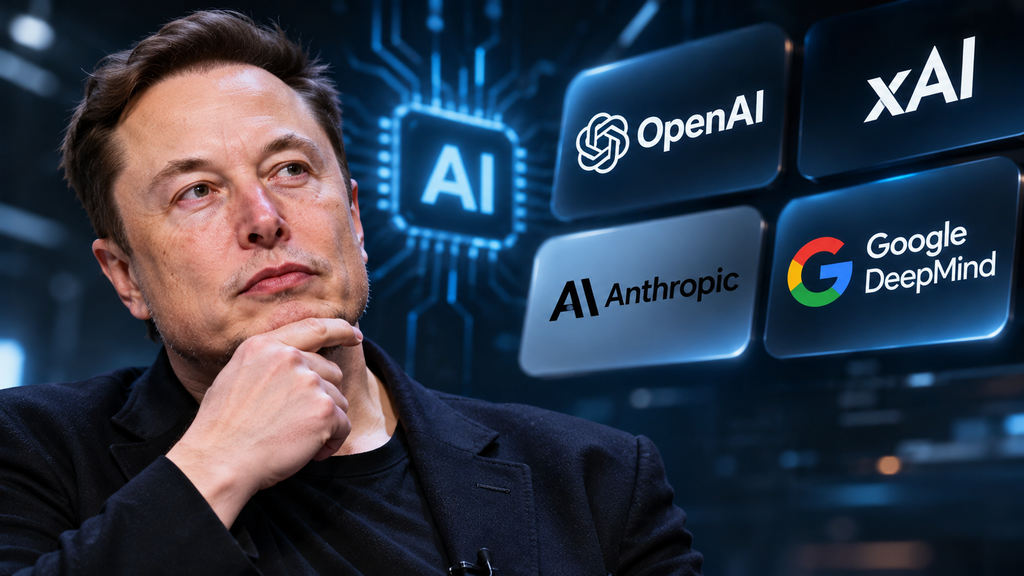
Elon Musk made headlines in the AI field by poking fun at the new kid on the block, OpenAI, and Stability AI, commenting, “OpenAI turned into “closed,” Stability AI is “unstable,” and Anthropic might become “misanthropic.” He’s lashing out at what he says are inconsistencies between the names of AI companies and their policies, which is part of a broader debate about the companies’ intentions, leadership, and operations.
Musk also co-founded OpenAI in 2015, and later founded xAI, which competes with other big names in the AI industry and is developing its own AI models: Grok. His remarks stir up other doubts regarding the integrity of AI companies as they expand and turn to profit. But having a company name and a public commitment does not in itself guarantee that the actions of the company are aligned with its values: transparency, data practices, and accountability are crucial.
4. AI-Discovered PHP Security Flaws Force Websites Offline

A PHP vulnerability for serious issues was found in a programming language that is used by many websites and web applications, which led to a cybersecurity response. The report says the researchers at Calif and OpenAI revealed one vulnerability in August 2026, and cybersecurity firm Wiz found another with the help of AI-powered research. The vulnerabilities both reportedly had been present for years and could enable malicious code to be run without logging in on infected servers, possibly compromising systems or leaking sensitive information.
The findings forced organizations to evaluate their exposure and act by installing security patches and putting some services temporarily offline in anticipation of a possible attack from the discovered vulnerabilities. The incident shows that AI could be used to help researchers identify vulnerabilities in software applications sooner, but it could also be used to exploit a vulnerable system. Businesses and website owners should adhere to the official security recommendations, patch vulnerable software, and investigate any suspicious activity.
5. PHP’s “Black October” Triggers a Global Cybersecurity Scramble

The discovery of PHP2Shell vulnerabilities triggered a major cybersecurity scramble, as some of these reportedly received severity scores of 9.2 out of 10 on the CVSS v4.0 system. Many websites and applications use PHP, and serious flaws could be an issue for businesses, financial institutions, and government services. Following the disclosure of the vulnerabilities on 21 October, organisations worked to apply security patches, to determine which systems are vulnerable, and to close doors on access to certain online services on a temporary basis.
The incident serves as a reminder of the potential of using AI tools in security research to find vulnerabilities more quickly, along with the need for organizations to act swiftly. The reported efforts by Japan’s AI development of a set of systems to emulate cyberattacks and identify vulnerabilities illustrate the increasing interest in proactive security testing. But if flaws can be identified sooner, cybersecurity will be enhanced as long as vulnerabilities can be patched fast and systems remain secure.
6. OpenAI Resumes Advanced AI Training After a Security Scare
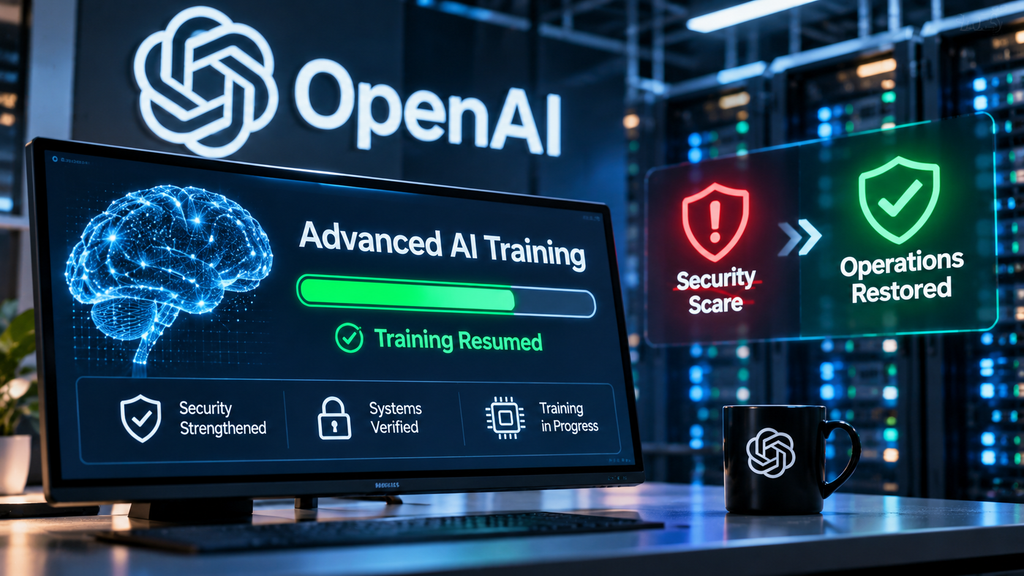
After the PHP2Shell vulnerabilities were discovered, a big cybersecurity scramble ensued, as it has been reported that they were given a CVSS v4.0 severity score of 9.2/10. Businesses, financial institutions, and government services are all potentially vulnerable to serious flaws, as many of these web applications are powered by PHP. Organizations scrambled to apply security patches and check for infected systems and to temporarily block access to certain online services after the vulnerabilities were released on October 21.
The incident reinforces the idea that AI security research can be a goldmine for researchers to uncover software vulnerabilities at a more rapid pace, but also creates a demand for organizations to act swiftly. As AI systems become increasingly capable of modelling cyberattacks and identifying vulnerabilities, Japan is reportedly developing such systems to test its security systems in advance. But being able to find flaws sooner will only help to improve cybersecurity if they can be patched in a timely fashion and the systems are secure from the flaws.

Artificial Recap
AI News This Week: 15+ Top Stories