
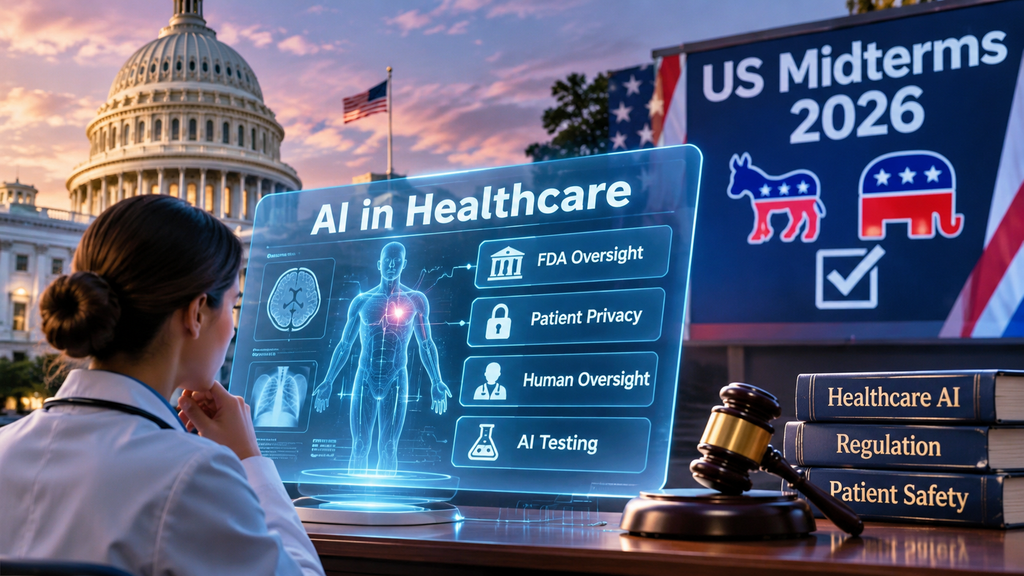
The 2026 midterm elections in the United States may impact more than just the political arena in Washington. With the increasing prevalence of AI in the medical field, from patient care to medical software, the outcome of the election could shape the evolution of the health AI industry, its oversight, and the safeguards provided to patients.
As lawmakers come under increasing pressure to strike the right balance between medical innovation and patient safety, the debate is growing in significance. Some would like to facilitate the arrival of AI-based health-care products to the market, and others fear letting automated systems have too much influence on health-care decisions.
Those rules will be up for the next Congress to make, especially in the realm of the Food and Drug Administration (FDA), patient privacy, and using AI in the clinical environment.
A New Congress Will Have More Influence Over AI Rules
The most significant change is that Democrats have taken control of both houses of Congress—the House and the Senate. This will provide them more influence over bills, congressional investigations, the priorities of congressional committees, and over federal agencies in the remaining two years of President Donald Trump’s term.
A critical issue is what level of freedom AI companies should have in developing AI systems for medical applications. Faster adoption proponents say the cumbersome process can delay beneficial medical breakthroughs. Others seek greater protections to ensure that AI models do not provide unsafe advice or recommendations, or affect decisions made by trained health care workers.
It doesn’t automatically mean new laws will be enacted regarding AI in Congress when they change hands. It might, however, lead to greater scrutiny of current policies and pressure on federal agencies to provide guidance on the monitoring of healthcare AI.
AI Testing and Patient Safety Could Get More Attention
Another topic that is coming to the fore is the use of AI testing in healthcare. Other states are considering creating a space for businesses to experiment with AI products in a regulated setting with certain restrictions and oversight. This might enable medical product developers to bring their products to market more widely, but incorrect medical AI outputs could lead to incorrect patient diagnosis and treatment.
There’s also pressure on lawmakers to maintain control of significant medical decisions with human hands. They launched the Doctors Not AI Act in September, with the intent of banning AI systems from giving autonomous advice regarding medical matters, which should be left to qualified doctors. It is significant that the proposal comes in the wake of the concerns raised over the automation of insurance claims and treatment approvals, underscoring the importance of ensuring there is clarity with respect to human liability should the healthcare AI bot get it wrong.
Public Trust Could Become Just as Important as Innovation
The election was also a sign of the growing fears of the public about AI. Voters voted down data center deals in various states, STAT reports on November 5, citing reasons such as electricity consumption, infrastructure costs, employment, and corporate influence. With the increasing integration of AI in healthcare, public trust is a critical factor that can influence its application.
Patients might be okay with AI systems that help them with diagnosis or ease paperwork, but not the same with systems that have access to their private and sensitive health information or that make insurance policy choices on their behalf without their consent. Protecting patient information will thus be important, as will be the reaction of lawmakers to the ways in which companies collect, store, share, and protect patient information.
Australian Employers Are Using AI to Track Workers Without Their Knowledge, Report Warns
The Next Two Years Could Define the Rules for Health AI
The incoming Congress will be asked a number of questions regarding the role of AI in healthcare, such as FDA regulation, payment for services that can be provided by AI, patient data protection, and the need for human oversight. The PATIENT AI Act offers a blueprint, but it is ultimately up to the actions of the new Congress and lawmakers’ priorities to determine its direction.
More transparent guidelines could assist healthcare organizations in comprehending their duties, offer healthcare professionals guidance on safe use of AI, and safeguard patients. While the midterm outcomes won’t rewrite medical AI in its entirety, they may help to mold its future regulation. The biggest hurdle will be the balance of technological advancement and patient safety and trust.